
Dec 14, 2025
How Text-to-Give Campaigns Work for Churches
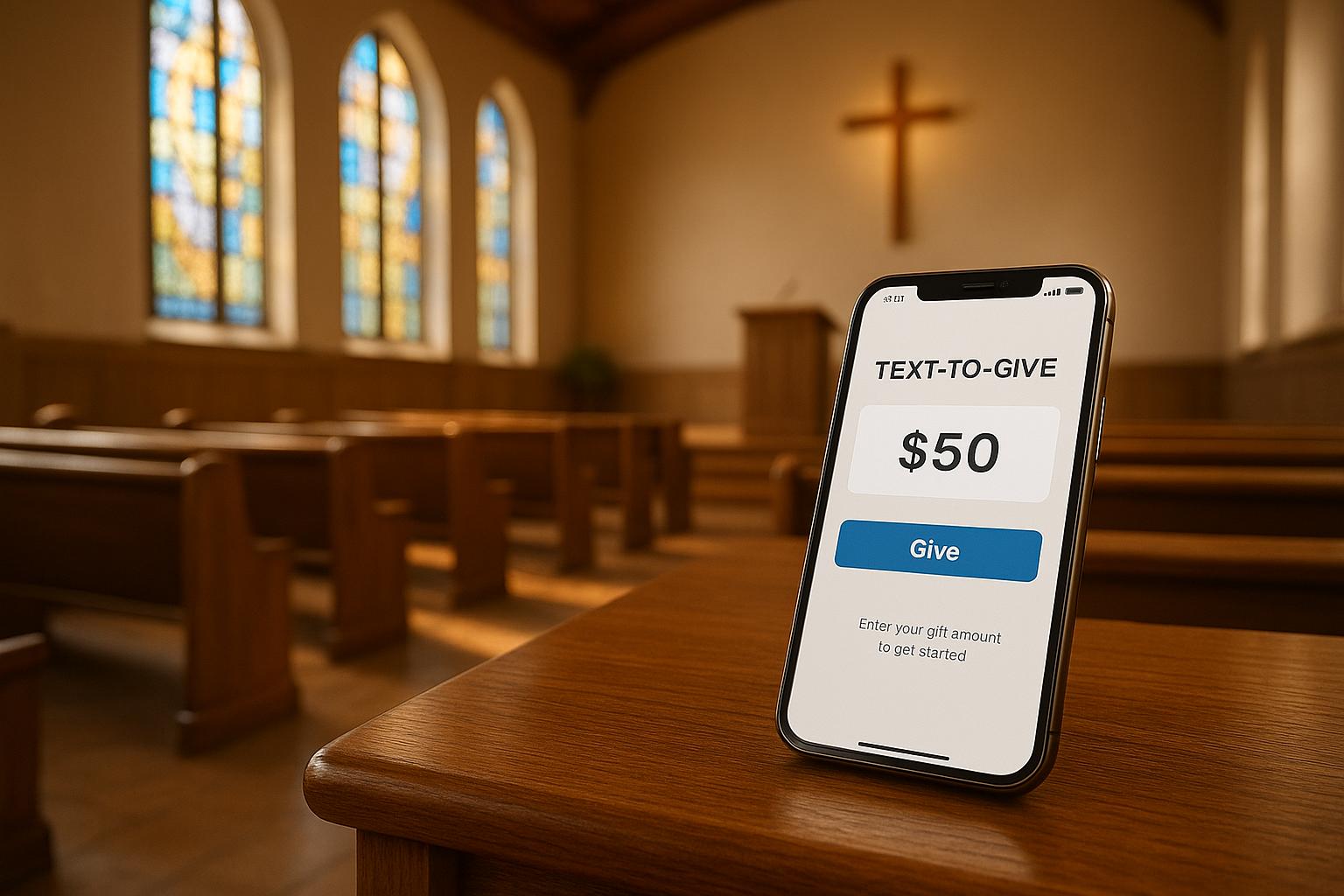
Text-to-give campaigns allow church members to donate easily via text message. Donors text a keyword (e.g., "GIVE") and an amount to a specific number, receive a secure link, and complete their donation quickly - no app or website needed. This method simplifies giving, encourages participation during services, and supports recurring donations.
In 2023, mobile giving accounted for over 26% of donations to faith-based organizations in the U.S., with an average donation of $107 per transaction. Churches benefit from increased contributions, flexibility for donors to give anytime, and reduced reliance on cash or checks.
Key steps include:
- Choose a provider: Look for features like keyword customization, recurring donation options, and secure payment processing.
- Set up the campaign: Create a memorable keyword, enable preset/custom donation amounts, and test thoroughly.
- Promote effectively: Use pulpit announcements, printed materials, social media, and live-streams to spread the word.
- Engage donors: Send thank-you messages, share updates on their impact, and encourage recurring giving.
Text-to-give is a modern, efficient way for churches to collect donations while making it easier for congregants to support their mission.
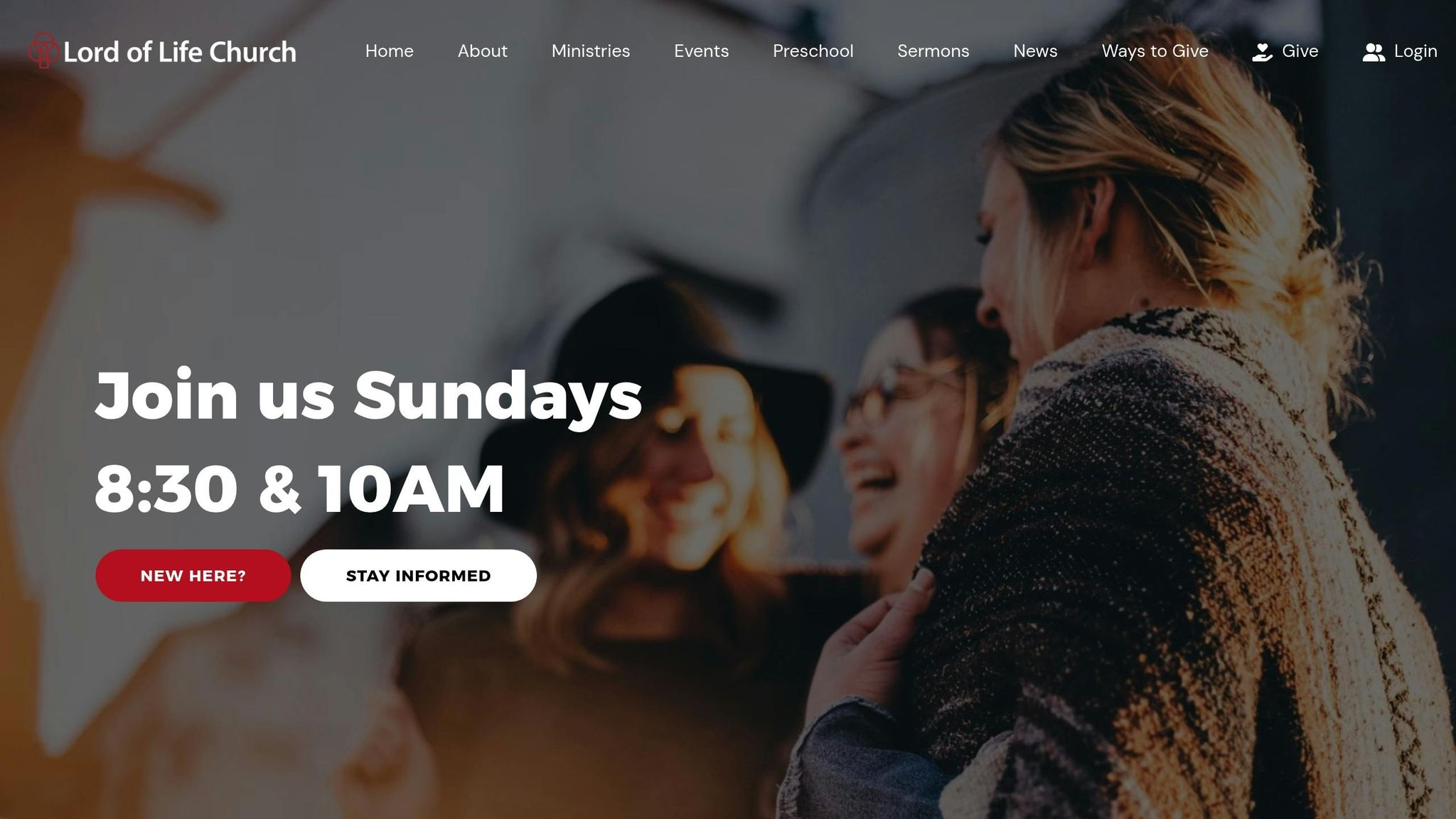
Give by Text Tutorial | Lord of Life Church
How to Set Up Text-to-Give for Your Church
Setting up text-to-give for your church involves three main steps: selecting a provider, configuring your campaign, and thoroughly testing the system.
Pick a Text-to-Give Provider
Start by choosing a provider that meets your church’s needs. One key feature to prioritize is keyword customization. This allows you to create easy-to-remember keywords, like "GIVE" or "CHURCH", that resonate with your congregation and make the donation process simple. Another important feature is recurring donation options, which can help ensure consistent contributions while reducing administrative hassle.
Look for providers that offer integration capabilities with your church management software, such as Planning Center or Church Community Builder. This type of integration can save you hours of manual data entry by automatically recording donations and keeping financial reports organized.
When handling donations, security is critical. Make sure your chosen provider complies with PCI DSS standards for payment processing and uses encryption to protect sensitive data. Additionally, having responsive customer support can be a lifesaver during setup or if technical issues arise during services.
Here’s a quick comparison of popular providers:
| Provider | Monthly Fee | Transaction Fee | Features |
|---|---|---|---|
| Tithe.ly | $19 | 2.9% + $0.30 | Keyword customization, recurring giving |
| Ministry Brands | Varies | Varies | Church management integration |
| Donorbox | Free/$ | 1.5% + Stripe fees | Easy setup, automated receipts |
Once you’ve selected a provider, it’s time to configure your campaign.
Set Up Your Campaign
After choosing a provider, you’ll receive a dedicated toll-free number for your church. Select a keyword that’s simple, memorable, and easy to spell. Avoid overly complicated phrases that could confuse donors, especially during emotional moments like altar calls or special appeals.
Set up preset donation amounts (e.g., $25, $50, $100) while also allowing donors to enter custom amounts. Enable automated receipts so donors receive immediate confirmation via text or email. This not only builds trust but also provides essential documentation for tax purposes.
The setup process typically includes entering your church’s banking details, customizing the donation forms, and ensuring all settings align with U.S. standards. Some providers, like Trumpia, can have your system ready to accept donations in as little as 48 hours. Make your instructions clear and concise - for example: "Text CHURCH to 123-456-7890 to give." This clarity encourages participation and avoids confusion.
Once your campaign is configured, the next step is to test everything thoroughly.
Test Before You Launch
Before rolling out your text-to-give system to the congregation, conduct detailed testing to ensure everything works smoothly. Test donations on a variety of devices to confirm compatibility, and try both preset and custom donation amounts to verify the process is seamless.
Check that your keyword triggers the correct donation form and that the form loads quickly on all devices. Automated receipts should arrive promptly with accurate details. If you’ve integrated your system with church management software, confirm that test donations are correctly recorded in your system.
Involve staff and volunteers in the testing phase. Their feedback can help identify any confusing aspects of the process that could frustrate donors during live campaigns. Be sure to test the recurring donation feature as well by texting keywords like "Recurring" to confirm that monthly giving options work as expected.
Pay close attention to receipt delivery and integration with backend systems during testing. These areas often reveal hidden technical issues that might not be obvious during the donation workflow. Address any problems before launching your campaign to ensure a smooth experience for your congregation - first impressions are crucial when introducing new giving methods.
For additional support, organizations like Share Services specialize in digital fundraising solutions tailored to nonprofits. They can guide churches with annual revenue between $1M and $20M in optimizing text-to-give campaigns and improving donor retention strategies.
How to Promote Your Text-to-Give Campaign
Once your text-to-give system is up and running, the next step is to make sure everyone in your congregation knows about it. Testing your system is important, but promoting it effectively is what will truly drive success. A mix of traditional church communication and digital outreach works best to spread the word. Let’s dive into how these strategies can help your campaign gain traction.
Tell Your Church Community
One of the most effective ways to introduce text-to-give is through pulpit announcements. These moments allow you to speak directly to your congregation when you have their full attention. Keep your message straightforward: share the keyword and phone number clearly and slowly. If your church has screens, display the information visually as well. For example, you might say, “Text GIVE to 555-123-4567.”
Printed materials like bulletins, newsletters, posters, and pew cards are also essential. Include the shortcode and keyword in prominent, easy-to-read sections. A step-by-step guide with instructions can make the process even clearer. For newsletters, consider adding extra details, such as answers to common questions about security or convenience.
Strategically place posters or flyers in high-traffic areas like the entrance, fellowship hall, or near the offering plates. Pew cards are particularly handy since they’re accessible during the service, allowing congregants to follow along or refer back to them later.
Churches that dedicate 2–4 weeks to intensive promotion - featuring multiple pulpit announcements, bulletin highlights, and visible signage - often experience higher adoption rates compared to those with minimal outreach efforts.
Use Digital Channels
Your church website is a key tool for reaching your congregation online. Make sure text-to-give information is easy to find, either by adding it to your main navigation menu or creating a dedicated "Give" page. Include the shortcode, keyword, and phone number at the top, followed by step-by-step instructions. Enhance this with screenshots or an embedded video that demonstrates how to donate.
Social media platforms like Facebook and Instagram are perfect for engaging members who might not attend every service. Share instructional posts, short demo videos, and graphics that highlight how simple and convenient text-to-give is. Posting regular reminders, especially around major giving seasons or special events, can keep it top of mind.
Email campaigns allow you to go into more detail. Send personalized messages to specific groups, such as frequent givers or younger members who are more comfortable with mobile technology. Including testimonials from members who’ve successfully used the system can help build trust and encourage participation.
For churches that offer live-streamed services, make sure to promote text-to-give during the broadcast. Display the shortcode and keyword on-screen and include verbal reminders about the benefits. For recorded services, add detailed instructions in the video description.
The goal is to ensure that every member of your congregation knows exactly how to use this new giving option.
Teach People How to Use It
Even with a well-tested system, some members might need extra guidance. Live demonstrations during services can be incredibly helpful. Walk through the process step by step: text the keyword to the number, enter the donation amount, provide payment details, and confirm the transaction. This visual approach is especially reassuring for older members or those less familiar with mobile technology.
Short instructional videos (around 1–2 minutes) are another great way to educate your congregation. Show these during services, post them on your website, and share them on social media. Make sure the videos cover the entire process and address common concerns like security and receipt delivery.
For those who prefer to learn at their own pace, add visual guides and FAQs to your website. Address common questions such as, “Is it secure?” or “What payment methods can I use?” in simple, clear language.
If you want to take it a step further, consider hosting workshops or informational sessions where members can practice using the system with staff available to answer questions. This hands-on approach can build confidence and reduce hesitation.
It’s important to present text-to-give as an additional option, not a replacement for traditional giving methods. This inclusive messaging ensures everyone feels comfortable, no matter how they choose to give. For instance, you might say, “Support our mission anytime, anywhere with just a text,” or “Give on the go with a simple text message.”
For extra support, organizations like Share Services specialize in helping churches with digital fundraising. They provide marketing strategies and donor engagement solutions that can take your promotional efforts to the next level.
Managing Donations and Keeping Donors Engaged
Once your campaign is live, the next step is managing donations effectively while keeping your donors connected and invested. A successful text-to-give campaign doesn’t just rely on the initial donation - it’s about creating a positive donor experience, tracking results, and safeguarding sensitive information to ensure long-term success.
How Donors Experience Text-to-Give
The donor experience begins the moment someone texts your church's unique keyword to the designated number. Instantly, they receive a secure link to a mobile-friendly donation page where they can enter their contribution amount and payment details.
The beauty of text-to-give lies in its simplicity. It’s designed to be straightforward, accessible to individuals of all ages and abilities, and requires no app downloads or website navigation. This ease of use encourages participation, but recurring donations are where it truly excels. Many platforms allow donors to set up weekly or monthly contributions right from the start. Churches can promote this option by explaining how consistent giving supports ministry planning and sharing real-life examples, like testimonials from recurring donors, to highlight its impact.
Keeping donors engaged doesn’t end with the transaction. Follow-up communication is key. Sending thank-you messages, providing updates on how their contributions are making a difference, and inviting them to church activities can help build a lasting connection. Tracking these interactions also offers valuable insights for improving future campaigns.
Track and Analyze Your Donations
Text-to-give platforms typically include dashboards packed with useful metrics. Regularly reviewing data like total donations, number of unique donors, average gift size, recurring donation rates, and donor retention can help you fine-tune your approach.
Analyzing this data can reveal patterns in giving. For instance, do donations spike after certain events or announcements? Are younger members more likely to give via text? These insights can guide your strategy, helping you craft more effective campaigns and strengthen donor communication.
Take the example of First Baptist Church of Dallas. In April 2023, they launched a text-to-give campaign with Ministry Brands. Over three months, they saw mobile donations climb by 38%, and recurring gifts rose by 29%. Weekly SMS reminders and personalized thank-you messages played a big role in boosting donor engagement and retention.
This kind of data doesn’t just help with campaign strategy - it’s also invaluable for financial planning. Churches that encourage recurring donations through text-to-give often see up to a 42% increase in donor retention compared to one-time gifts. This predictable income stream simplifies budgeting and allows for more effective ministry planning.
"Reactivation is cheaper than acquisition. Email can be effective, but multi-channel approaches are even better." - Eddie Laing, Paid Media Specialist
Integrating your text-to-give platform with your church management software can make tracking even easier. It eliminates duplicate data entry and gives you a full view of each donor’s giving history. While analyzing these metrics, don’t overlook the importance of maintaining donor trust by keeping their data secure.
Keep Donor Data Safe and Private
Protecting donor information is critical - not just for compliance but for maintaining trust. Choose a text-to-give provider that uses encrypted payment processing and adheres to PCI DSS standards.
Access to donor data should be limited to authorized personnel, and security measures like two-factor authentication and regular password updates should be implemented. Staff training is also essential to ensure everyone understands the importance of data privacy and follows best practices for safeguarding sensitive information.
Legal compliance is another crucial aspect. Churches must obtain explicit consent to collect and use donor information, provide clear privacy policies, and respect opt-out requests. Compliance with regulations like the Telephone Consumer Protection Act (TCPA) and state laws, such as the California Consumer Privacy Act (CCPA), is non-negotiable.
It’s worth noting that 60% of donors worry about the security of their personal information when giving online. Organizations that prioritize strong data protection measures can increase donor trust and retention by up to 30%. A clear privacy policy that explains how donor data will be used and protected - and openly sharing this policy with your congregation - can go a long way in building confidence. Regular audits of your data security practices also help ensure ongoing compliance.
"Data security is not just a technical issue; it's a trust issue. Donors need to feel confident that their information is safe." - Jane Doe, Data Security Expert, Nonprofit Tech
For churches aiming to improve donor engagement, organizations like Share Services offer tailored solutions. Their expertise in digital fundraising and donor retention strategies can help your church strengthen connections with supporters and foster loyalty through structured, multi-channel approaches.
sbb-itb-deea482
Advanced Tips and Common Problems
Building on the basics of setup, promotion, and donor management, these advanced insights can take your text-to-give strategy to the next level. By targeting specific groups, fostering meaningful connections, and addressing potential challenges early, churches can significantly improve their text-to-give campaigns.
Ways to Increase Engagement
Personalizing your outreach through audience segmentation can turn generic donation requests into messages that truly connect. Break your audience into groups based on factors like age, giving history, or involvement in ministries. For instance, younger members might respond better to messages highlighting digital outreach, while long-time donors may value updates on how their steady contributions sustain key initiatives. Many platforms even allow you to set up segmented keywords like "YOUTH" or "MISSIONS" to make this process seamless.
Adding a spiritual element, such as integrating prayer requests, can deepen engagement. Using a keyword like "PRAY", you can invite congregation members to share their prayer needs while also contributing financially. This dual-purpose approach not only enhances participation but also builds a stronger sense of community. Platforms with two-way messaging capabilities make it easy to respond to prayer requests, fostering an ongoing connection between donors and your church's mission.
Encourage recurring donations by offering small incentives like public recognition, exclusive updates, or thank-you gifts. Highlighting how consistent support fuels ongoing ministry work can inspire donors to commit to long-term giving.
Fix Common Problems
While these strategies boost engagement, addressing common pitfalls is equally important to maintain momentum.
Low participation often stems from unclear instructions or overly complicated processes. The solution? Communicate clearly and simply. Provide step-by-step guides in various formats - slides during services, bulletin inserts, or social media posts - and consider live demonstrations to show how easy it is to donate. A streamlined process that requires only a quick text message and minimal registration is key. If donors have to download apps or navigate confusing websites, participation will likely drop.
To further reduce confusion, offer multiple ways for donors to learn. Short video tutorials shared on your website, social media, or email newsletters can be especially effective. Having staff available after services to answer questions can also remove barriers and encourage participation.
Technical issues can frustrate donors and damage trust. To prevent this, choose a provider with reliable, real-time support and test your system regularly - not just at the initial setup but continuously. Establishing a clear process for handling technical problems will help maintain donor confidence and ensure smooth operations.
"Share helped us test simplified + focused messaging that improved our conversion rates."
- Jasmine Morse, Advancement Department
Compare Strategies at a Glance
A simple table can help clarify how these strategies work and their benefits:
| Feature/Strategy | Description | Benefit |
|---|---|---|
| Audience Segmentation | Target specific groups within the congregation | Boosts engagement and donations |
| Integration with Activities | Use text-to-give for prayer requests and volunteer sign-ups | Expands participation and connection |
| Incentives | Offer recognition or small gifts for recurring donations | Encourages consistent contributions |
| Clear Communication | Provide step-by-step guides and video tutorials | Reduces confusion and technical issues |
| Reliable Support | Choose a provider with strong, real-time support | Minimizes disruptions and builds trust |
For churches looking to implement these strategies effectively, Share Services offers digital fundraising solutions tailored to donor retention and multi-channel engagement. Their expertise can help you maximize your text-to-give efforts while fostering deeper connections with your congregation.
How Share Services Helps Churches with Text-to-Give
Using the strategies mentioned earlier can improve your text-to-give campaigns, but teaming up with experts who understand the unique challenges of church fundraising can take things to the next level. Share Services specializes in guiding churches through the world of digital fundraising while keeping the personal connections that are so essential to church communities intact. Here’s a closer look at what they bring to the table.
Services Share Services Offers
Share Services works with churches and faith-based nonprofits that have annual revenues between $1 million and $20 million. They don’t just set up text-to-give campaigns - they create fully integrated strategies that work across multiple platforms.
One of their standout offerings is recurring giving programs, which help churches establish steady revenue streams. These programs allow donors to set up automated contributions via SMS, complete with reminders and receipts to keep things running smoothly.
Their multi-channel donor reactivation approach is another game-changer. Instead of sending out generic appeals, Share Services develops targeted campaigns. For example, they might start with a personalized SMS to re-engage past donors, follow up with tailored emails, and then reinforce the message through social media. This layered strategy significantly increases the chances of reconnecting with lapsed supporters.
Another key focus is brand and messaging development. Share Services helps churches craft clear and emotionally resonant appeals that align with their unique mission. Their storytelling expertise ensures that churches can communicate their vision in a way that inspires action and generosity.
For those interested in working with them, Share Services offers modular pricing. Their strategy retainer starts at $3,500 per month, which includes access to dedicated nonprofit strategists and weekly strategy sessions. Additional services can be added based on specific needs.
How Churches Benefit
The services provided by Share Services are designed to deliver tangible benefits for churches. By integrating these digital strategies, they help churches not only increase immediate donations but also build stronger, long-term relationships with their donors.
One major advantage is the time and expertise they bring. Church staff often juggle multiple responsibilities, and managing a complex digital fundraising campaign can be overwhelming. Share Services takes care of the technical and strategic aspects, freeing up church leaders to focus on their ministry.
"If I was actually doing this project, it would have taken me half a year, and Share was able to do it in a couple of months." - Kyle Birch, Director of Communications
Another benefit is their data-driven approach. Instead of relying on guesswork, churches gain access to detailed analytics and reporting. This helps them understand which messages resonate most, which channels drive the best results, and how to refine their campaigns for future success.
Share Services also excels at donor retention strategies. They ensure that new text-to-give donors feel appreciated and connected. From thank-you messages to updates on how their contributions are making a difference, their follow-up systems deepen donor engagement and loyalty.
For example, they recently helped a church implement a recurring giving strategy that led to nearly 100 new monthly donors. By testing simplified messaging and using paid display ad retargeting, they achieved results that would have been difficult for most churches to replicate on their own.
Their expertise in expanding reach is another standout feature. Through targeted ads, social media campaigns, and optimized donation pages, Share Services helps churches connect with people who share their values - even those outside their immediate congregation.
Most importantly, Share Services ensures that churches maintain the personal touch that makes faith-based fundraising so unique. By blending technology with relationship-building, they help churches amplify their impact without losing the heart of their mission.
Conclusion
Text-to-give brings a modern twist to church fundraising while keeping the personal connections that make communities thrive. With just a smartphone, congregants can contribute without the hassle of downloading apps or navigating complicated websites - making giving easier and more inviting.
To ensure everything runs smoothly, it’s essential to choose a reliable provider, create memorable keywords, and thoroughly test the system. Skipping these steps could lead to donor frustration and reduced participation.
Promoting the campaign effectively across multiple channels is key. Use tools like visual aids, live demonstrations, and step-by-step instructions to make the process clear and approachable. This kind of communication not only builds confidence but also encourages more people to take part.
Follow-up is just as important. Sending thank-you messages, sharing impact stories, and providing regular updates helps build trust and fosters a sense of connection. These efforts can turn one-time donors into ongoing supporters.
The numbers back this up: mobile giving is on the rise, with over 50% of donors preferring to give through their mobile devices. Churches and nonprofits that use text-to-give campaigns have seen donations increase by as much as 32%. This growth in mobile giving not only boosts funds but also extends your ministry’s reach.
FAQs
What should churches consider when choosing a text-to-give provider?
When choosing a text-to-give platform for your church, prioritize features that simplify and safeguard the giving process for your congregation. Opt for platforms with an easy setup, a straightforward interface, and secure payment processing to create a hassle-free experience for donors.
It’s also worth checking if the provider offers customizable donation options, like recurring contributions or campaign-specific giving. Integration with your current church management software can streamline operations even further. Lastly, look for transparent pricing and dependable customer support to avoid hidden fees and ensure everything runs smoothly.
What are the best ways for churches to promote their text-to-give campaigns and encourage participation?
To get the most out of a text-to-give campaign, churches should prioritize clear communication and consistent outreach. Start by announcing the campaign during services, and provide simple, step-by-step instructions in church bulletins, newsletters, or on the church's website. The goal is to make it straightforward for everyone to participate.
Take advantage of digital tools like social media, email, and church apps to spread the word further. Share inspiring stories about how the donations will be used and emphasize that even small contributions can create meaningful change. You could also use visual aids - posters, slides, or banners - with the text-to-give number clearly displayed at church events or gatherings to keep it front and center.
Don't forget to follow up with donors. Send thank-you messages and share updates on how the campaign is progressing. Showing appreciation and transparency builds trust and encourages members to stay engaged in future giving initiatives.
How can churches protect donor information during text-to-give campaigns?
To keep donor information safe during text-to-give campaigns, you need to rely on secure platforms that meet industry standards like PCI DSS (Payment Card Industry Data Security Standard). Encryption is a must for all transactions to safeguard sensitive payment information.
Beyond that, make it a habit to update and monitor your systems frequently for any vulnerabilities. Training your team on data security best practices is another critical step. Being upfront with donors about the measures you take to protect their information can strengthen trust and encourage more people to get involved.
Related Blog Posts
Get helpful resources, straight to your inbox
We love sharing tools, ideas, and stories that make nonprofit work a little lighter and a lot more effective. Sign up below and we’ll send you practical tips, free resources, and a bit of encouragement—because the work you’re doing matters.
No spam. Just good stuff for good people.