
Jan 17, 2026
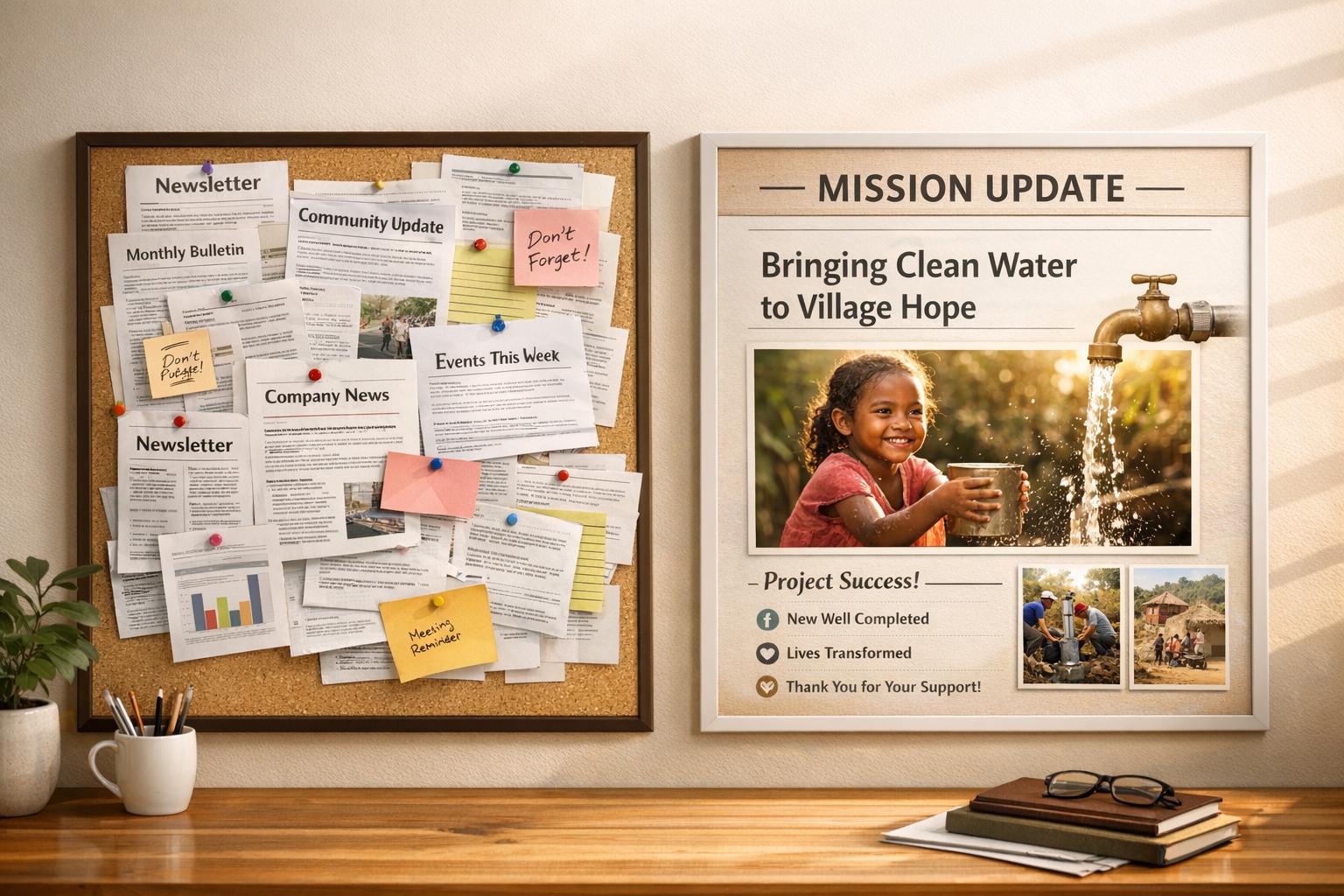
Mission Updates vs. Generic Newsletters
Not all nonprofit emails are equally effective. Mission-driven updates focus on storytelling, personalization, and showing donors the direct impact of their contributions. Generic newsletters, on the other hand, often lack these elements, leading to lower engagement and donor retention.
Key Takeaways:
- Mission Updates: Highlight personal stories, tailor content to donor interests, and focus on impact. This approach can boost donor retention rates by up to 67% and increase revenue by 760%.
- Generic Newsletters: Broad, impersonal, and often focused on organizational updates. These fail to build emotional connections, resulting in lower engagement and higher donor drop-off rates.
Why Mission Updates Work:
- Storytelling: Sharing real-life transformations connects donors emotionally, increasing donations by up to 50%.
- Personalization: Emails tailored to donor interests see open rates 82% higher than generic ones.
- Retention: Personalized updates cost less to maintain donor relationships ($0.20 per $1 raised) compared to acquiring new donors ($1.50).
Quick Comparison:
| Feature | Mission Updates | Generic Newsletters |
|---|---|---|
| Focus | Impact stories, personal updates | Organizational news |
| Engagement | High (personalized content) | Low (one-size-fits-all) |
| Retention Rates | 67% higher | Lower |
| Revenue Impact | Up to 760% boost | Minimal |

Mission Updates vs Generic Newsletters: Performance Comparison
💡Nonprofit Visual Storytelling: Strategies for 360° Stewardship
Mission-Driven Updates: Connecting Donors to Impact
Mission-driven updates shift the focus from organizational achievements to showcasing the real-life impact of donor contributions. Instead of broad statistics, these updates highlight the stories of individuals whose lives have been changed. For example, in 2016, GlobalGiving's Chief Product Officer, Kevin Conroy, noticed diminishing returns from 3.5 million emails. His team introduced a personalization system, similar to Netflix's recommendation engine, which analyzed donor behavior. The result? Engagement and donations skyrocketed - 10× more than before - with an additional 20% boost when donor history was factored in. This strategy underscores the power of storytelling to inspire action.
Using Stories to Drive Action
Stories are a powerful tool for nonprofits, significantly improving donor retention (22×). They also tap into the "identifiable victim effect", which can increase donations by 50% and raise the average gift size by 20%.
The most effective updates follow a simple yet impactful structure: Character, Conflict, Resolution. They introduce a specific person or family, outline the challenges they faced, and show how donor support changed their lives. For example, instead of saying, "Our program helped 100 families", a more engaging update might share the journey of one family, describing their struggles before receiving help and the transformation that followed. This "show, don't tell" approach creates a deeper emotional connection.
"Through storytelling, nonprofits can convey the human impact of their work, crafting narratives that resonate emotionally with donors and illustrate the tangible outcomes of their contributions."
– Lynne Wester, Principal and Founder, Donor Relations Group
Keeping donors updated on the progress of these stories strengthens their sense of impact. Nonprofits that do this report 67% higher donor retention, with 80% of donors more likely to renew their support.
Personalization and Relevance
Personalization goes far beyond simply addressing donors by name. It involves tailoring updates, project recommendations, and impact stories to match each donor’s interests and giving history. Kevin Conroy of GlobalGiving explained:
"If you're able to acknowledge those reasons in your communications with your donor and appeal to the common ground that you have with them, you're going to find much better results".
By segmenting donors based on their past contributions, interests, or event attendance, nonprofits can ensure each donor receives updates that matter to them. For instance, someone who supported a women’s empowerment project might receive updates about similar initiatives in other regions.
Donors also prefer a personal touch in communication. Research shows that 58.5% of donors appreciate hearing from a specific individual within a nonprofit, and 74.4% are more motivated to give when campaigns feel personalized and compelling. Interestingly, smaller nonprofits often see higher email open rates - 45.70% compared to 27.64% for larger organizations - when they use personalized updates.
Strategic use of donor data is key. For example, a thank-you email that says, "Your $25 provided five blankets to families in need", transforms a simple acknowledgment into a partnership, encouraging donors to give again.
Generic Newsletters: Common Problems and Missed Opportunities
Generic newsletters are everywhere in nonprofit communications, yet they often fall short when it comes to engaging donors. By sending the same message to every recipient - without considering individual interests, donation history, or connections to specific programs - these newsletters miss the mark. They fail to deliver the kind of personalized, impact-driven content that leads to lasting donor relationships. As Claire Axelrad, Founder of Clairification, points out:
"Most donor newsletters are insufficiently engaging. You're not making the impact you need to make to keep your donors, let alone get them to give more the next time you ask".
Missing Personalization
Treating donors like a faceless crowd is a major misstep. When everyone gets the same message, donors don’t feel recognized or valued. Alex Huntsberger from Neon One captures this sentiment perfectly:
"No one wants to feel like Donor #567, just another faceless donor".
The numbers back this up. Only 19.4% of new donors give again the following year, while a staggering four out of five first-time donors stop giving altogether. One big reason? Impersonal communication.
This issue isn’t just about feelings - it has financial consequences. Retaining a donor costs only $0.20 for every dollar raised, while acquiring a new donor costs $1.50. Despite this, only half of fundraisers segment their donors for targeted outreach, even though 87% say personalized communication is their most effective retention strategy. Every generic newsletter sent represents a missed chance to strengthen those vital connections.
Weak Impact Stories
Another common problem with generic newsletters is their lack of compelling storytelling. Instead of focusing on the human impact of donor contributions, these newsletters often lean on statistics or organizational updates - like announcing new board members or staff hires. While these updates may be important internally, they rarely spark emotional connections with donors. As Rob Burke, CMO of DonorDock, explains:
"Donors don't give to numbers, they give to people. They give when a story moves them, when they feel like they can step in and play a role in someone's transformation".
For example, a newsletter that says "2,000 meals served" might demonstrate credibility, but it doesn’t evoke the same emotional response as a story about a specific individual whose life was changed by those meals. Research shows that people are 22 times more likely to remember facts when they’re tied to a story, and fundraising campaigns driven by storytelling see a 50% increase in donations compared to those that rely solely on data.
Lower Engagement Numbers
The difference in performance between generic newsletters and personalized, mission-focused updates is striking. Personalized emails have open rates that are 82% higher than generic ones, and subject lines that include personalization are 26% more likely to be opened. Even more compelling, segmented email campaigns can boost revenue by as much as 760%.
| Metric | Generic Newsletters | Personalized Mission Updates |
|---|---|---|
| Open Rate | Baseline | 82% higher |
| Subject Line Impact | Baseline | 26% more opens |
| Revenue Potential | Baseline | Up to 760% increase |
| New Donor Retention | 19.4% | 39% higher with personal follow-up |
| Cost to Raise $1 | $1.50 (acquisition) | $0.20 (retention) |
These figures highlight the enormous potential of personalized communication. By moving away from generic messaging and focusing on meaningful, mission-driven updates, nonprofits can deepen donor relationships and significantly improve their results.
sbb-itb-deea482
Side-by-Side Comparison: Mission Updates vs. Generic Newsletters
Performance Metrics and Results
The numbers paint a clear picture: mission-driven updates outperform generic newsletters by a wide margin. In a three-month test, nonprofits that consistently sent personalized donor emails saw a 275% jump in unique open rates and an astonishing 678% increase in unique click rates compared to those relying on a single quarterly newsletter. This shift doesn't just improve metrics; it transforms donor engagement.
Generic newsletters often end up in the "I'll read it later" pile, losing their chance to make an impact. On the other hand, mission-driven updates - packed with cause-related news and compelling impact stories - grab attention and keep donors engaged. As Nick Black, CEO of GoodUnited, puts it:
"The non-profits who consistently send me interesting, value-add emails, earn my attention. And once you have my attention, my second gift is yours to lose".
The difference extends beyond open and click rates. Personalized calls to action perform 202% better than generic ones, and subject lines tailored to the recipient are 26% more likely to be opened. Adding videos to mission-driven updates can further boost click-through rates by 65%. The table below breaks down these differences.
Comparison Table
| Feature | Mission-Driven Updates | Generic Newsletters |
|---|---|---|
| Content Focus | Impact stories and cause-related news | Organizational updates and broad summaries |
| Personalization | High; tailored to donor interests and past actions | Low; one-size-fits-all approach |
| Donor Segmentation | High; targeted messages based on interests | Low; sent to the entire list |
| Engagement Type | Active (e.g., surveys, petitions, replies) | Passive (reading only) |
| Frequency | Consistent/weekly with engaging content | Monthly or quarterly |
| Open Rate Impact | Up to 275% increase in unique opens | Often ignored or postponed |
| Click Rate Impact | Up to 678% increase in unique clicks | Lower due to lack of relevance |
| Long-term Outcomes | Higher donor retention and monthly giving | Greater risk of being overlooked |
Mission-driven updates also encourage active donor participation, such as filling out surveys, signing petitions, or replying directly to emails. This approach strengthens connections and leads to better long-term results, including higher donor retention and increased recurring contributions.
How to Create Effective Mission-Driven Updates
Planning Content and Crafting Stories
Shifting from generic newsletters to updates that align with your mission starts by defining a clear purpose for each communication. Are you aiming to share an impactful story, recruit volunteers, or rally support for a campaign? Be specific about your goal for every update. Instead of relying on broad statistics, focus on a single, powerful story - like how one person’s life was transformed - because personal narratives resonate more deeply than numbers ever could [41, 43].
Make your content easy to scan and visually appealing. Research shows that most readers skim only about 20% of the text on a screen. To grab attention, use short paragraphs, bullet points, and high-quality images. Photos of real people - staff, volunteers, or beneficiaries - can create a connection that plain data simply can’t. Subject lines should be concise, ideally under 50 characters, and written in inclusive, second-person language (e.g., "See how you can make a difference") to draw readers in.
Follow the 3-1 rule to strike the right balance: for every fundraising request, send three non-monetary updates, like thank-you notes, impact stories, or helpful resources. This approach keeps donors engaged without overwhelming them with asks. It’s worth noting that 74% of donors are more likely to increase their contributions when presented with a compelling and urgent reason to give. By establishing this balance, you lay the groundwork for effective message targeting through donor segmentation.
Using Donor Segmentation
Donor segmentation is all about tailoring your messages to resonate with different groups of supporters. Start by categorizing donors based on factors like how recently and frequently they’ve given, as well as their specific interests. For example, new donors might benefit from a welcome series, while long-time supporters would appreciate detailed updates on the impact of their contributions. Similarly, donors who support a particular program should receive stories that align with the causes they care about most [46, 47].
You can also segment donors by their level of engagement. For instance, send less frequent updates to those who rarely check emails and increase the frequency for highly engaged donors. Another effective strategy is to group donors by the size of their contributions - whether small, mid-tier, or major. Timing is critical here: following up within 48 hours of a donation with specific details about its impact can significantly enhance engagement [47, 48].
Personalization makes a huge difference. Emails with personalized subject lines see a 26% boost in open rates, and overall, personalized messages achieve open rates that are 82% higher than generic ones. But personalization goes beyond just using someone’s name - it’s about addressing the reasons they give. When your communication reflects their motivations, it feels less transactional and more like meaningful guidance. Once you’ve established clear segments, plan your schedule to ensure timely and relevant updates.
Timing and Frequency of Updates
Finding the right rhythm for your updates is key to keeping donors engaged without overwhelming them. Monthly updates strike a good balance, while quarterly updates may feel too infrequent to maintain a strong connection. On the other hand, sending messages twice a month could lead to fatigue [43, 30]. For the best open rates, aim to send updates on a Tuesday, Wednesday, or Thursday between 2:00 PM and 5:00 PM.
Consistency builds trust, so consider setting a regular schedule - like the first Saturday of each month or a specific weekday. Automated welcome emails should go out immediately after someone signs up, as this is when engagement is typically at its peak [43, 30].
As the year progresses, consider increasing your communication frequency during the giving season from September to December. This period accounts for a large portion of annual donations. Keep in mind that nearly half of nonprofit website traffic comes from mobile devices, so ensure your updates are mobile-friendly to avoid losing potential donors [42, 43]. Finally, use A/B testing to experiment with different delivery times and formats to discover what works best for your unique audience [43, 30].
Conclusion: Selecting the Right Approach for Your Donors
Choosing between mission-focused updates and generic newsletters comes down to a simple yet crucial question: do you want to merely inform your donors, or truly connect with them? Research shows that donors who feel a strong relationship with a nonprofit are 83% more likely to feel deeply connected, compared to just 15% of those with weaker ties. This difference exists because mission-driven updates prioritize making donors feel appreciated and involved, rather than just keeping them in the loop. It’s a clear indication that generic newsletters often miss the mark when it comes to fostering meaningful donor relationships.
Generic newsletters tend to focus on statistics and broad announcements, which often lack emotional resonance. On the other hand, mission-driven updates bring your work to life through personal stories and specific examples of impact. For instance, showing how a $25 donation can provide five blankets for a family creates a tangible connection to the cause. This matters because 68.8% of donors are more likely to give when they receive a targeted appeal addressing a specific need, rather than a general update. Tim Kersten, CEO of RKD Group, captures this perfectly:
"The biggest differentiators between donors who had weak and strong relationships centered around the notions of feeling valued and involved".
This underscores the importance of using personalized, narrative-driven communication to strengthen donor relationships.
Mission-driven updates go beyond storytelling - they’re about building genuine connections. Donors prefer hearing from a real person within your organization (58.5% favor personal communication over generic messaging) and want to see how their contributions result in measurable change. By delivering updates that focus on mission impact and personal engagement, you not only increase donor involvement but also foster long-term loyalty.
Take a moment to reassess your current communication strategy. Look at your updates: are you sharing compelling impact stories? Are you segmenting your audience based on their donation history and interests? Are your messages coming from a recognizable individual? These adjustments can transform your donor communications into meaningful partnerships, ensuring your mission receives the sustained support it needs to thrive.
FAQs
How does storytelling in mission updates improve donor engagement?
Storytelling turns routine mission updates into heartfelt narratives that let donors truly feel the impact of their contributions. Instead of relying solely on numbers and data, stories connect donors to real people and real outcomes, making their support feel personal and deeply meaningful. Sharing the journey of someone your mission has helped or highlighting obstacles that have been overcome can inspire donors to stay involved and continue their support.
Unlike standard newsletters, storytelling keeps donors engaged long after they’ve made a donation. It helps them see the ongoing ripple effects of their generosity. By sharing regular, story-driven updates, you can build trust, deepen donor loyalty, and even encourage them to share these stories with their network - spreading your mission further. Share Services works with nonprofits to create compelling, mission-centered communications that keep donors emotionally connected and committed for the long haul.
Why is personalizing nonprofit emails important?
Personalized nonprofit emails are a powerful way to build stronger connections with supporters while boosting engagement. When messages are tailored to the recipient, they often lead to better results - higher open rates, more click-throughs, and fewer unsubscribes. For instance, simply including the recipient's name in the subject line can increase open rates by 26%. Even better, personalized calls-to-action can perform over 200% better than generic ones.
But the benefits don’t stop at engagement. Personalized emails also strengthen donor relationships, encouraging higher donation rates and fostering long-term loyalty. Share Services equips nonprofits with the tools and strategies to craft mission-driven, personalized emails that turn ordinary newsletters into meaningful, two-way conversations.
Why do generic newsletters struggle to retain donors?
Generic newsletters often miss the mark when it comes to forging a personal connection with donors. They tend to stick to broad, one-size-fits-all updates that fail to spotlight the donor’s individual contributions or the unique role they play in advancing the organization’s mission. This lack of personal touch can leave donors feeling undervalued or detached, which might lead to waning interest over time.
On the other hand, updates that center on the mission and show specific, real-world outcomes resonate much more deeply. By highlighting the tangible difference donors help create, these updates strengthen emotional bonds and encourage lasting loyalty and support.
Related Blog Posts
Get helpful resources, straight to your inbox
We love sharing tools, ideas, and stories that make nonprofit work a little lighter and a lot more effective. Sign up below and we’ll send you practical tips, free resources, and a bit of encouragement—because the work you’re doing matters.
No spam. Just good stuff for good people.