
Mar 17, 2026
Case Studies: Faith-Based Donor Personalization
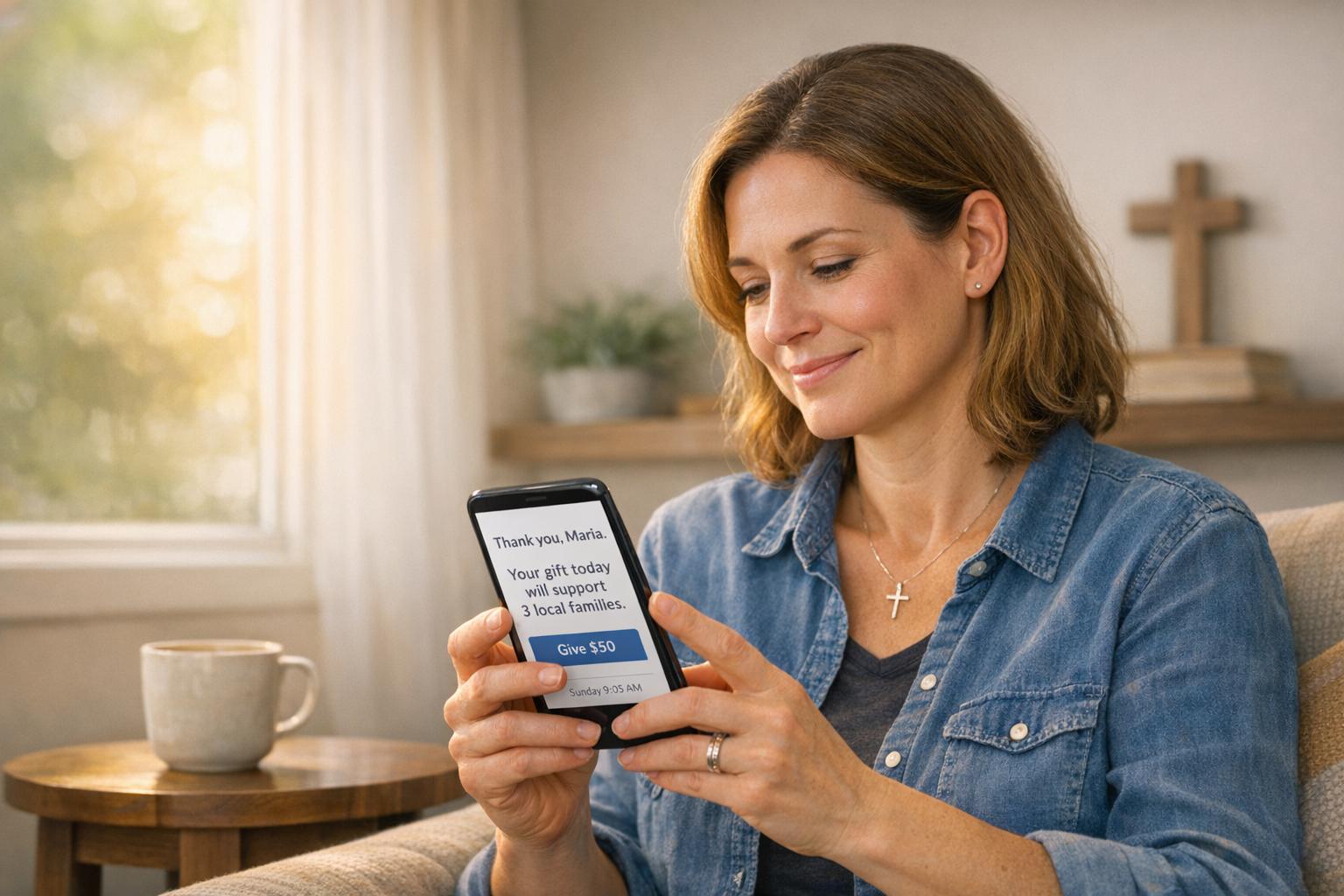
Faith-based donors contribute not just financially but as partners in a mission aligned with their beliefs. Personalization in donor outreach enhances this connection, driving better engagement and results. Key takeaways from the article include:
- Personalization works: Aligning appeals with donors' values fosters stronger relationships.
- Data-driven strategies deliver results: AI tools like propensity modeling and timing optimization significantly boost donations.
- Real-world success stories: Examples include a 157% growth in digital donors for Bible League Canada and a 4.1x increase in donations for Muslim Charity using personalized communication.
- Effective tools and methods: Faith-based organizations use tailored messaging, donor segmentation, and timing strategies to maximize impact.
Organizations like Share Services support nonprofits in implementing these strategies, offering AI-powered tools, segmentation, and personalized campaigns to deepen donor engagement and increase giving.
From Personas to Partnerships: Personalizing Donor Engagement
Case Studies of Faith-Based Donor Personalization
These examples showcase how faith-based organizations have successfully used personalization to tackle challenges and drive growth. Each case illustrates a unique approach - from leveraging data analytics to refining digital strategies - demonstrating how tailored efforts can transform donor engagement.
Case Study 1: Global Ministry Upgrade Campaign
A global ministry faced challenges with its CRM system, which lacked the ability to identify donors ready to increase their contributions. By integrating GivingDNA analytics, they pinpointed 464 donors who had contributed $500 or more in the past two years but weren’t categorized as major donors.
Instead of sending generic mailers, the ministry designed personalized 9" x 12" proposal packages that reflected each donor’s giving history. This targeted method achieved a 6.25% response rate, with 55% of respondents increasing their giving levels. This case illustrates how even small-scale personalization, supported by precise data, can unlock untapped donor potential.
Case Study 2: Century-Old Nonprofit's Digital Transformation
Wheaton Academy, a faith-based school, launched a $30 million, 15-year capital campaign. To move beyond broad appeals, they adopted what they called "Transformational Donor Experiences". For legacy donors, they created personalized presentations featuring nostalgic photos. For spiritually motivated supporters, they introduced a "Cross Plaza" concept to align with their values.
This personalized approach brought in $24 million from just 30 donors within two years, including nine of the largest gifts in the school’s history. By treating each major donor as an individual with unique motivations, Wheaton Academy significantly accelerated its fundraising efforts.
Case Study 3: Christian Denomination Direct Mail Optimization
An international Christian denomination with 9 million members and a 70-year history faced declining donations and waning donor loyalty. Research uncovered that inconsistent messaging across various touchpoints had caused brand confusion, making it harder for donors to see the impact of their gifts.
To resolve this, the organization conducted a brand and communications audit, mapping every donor interaction to identify inconsistencies. They then developed a unified brand strategy and personalized direct mail campaigns based on donor segments, such as spiritual interests and donation history. This led to a 40% increase in donor revenue potential.
Case Study 4: Child Sponsorship Digital Retargeting
Christian Relief Fund sought to deepen relationships with existing child sponsors and attract new ones through digital channels. They implemented personalized digital ads and retargeting campaigns that appealed to the emotional and spiritual motivations of potential sponsors. This strategy resulted in a 35% rise in new child sponsorships and a 28% improvement in sponsor retention rates. The success highlights how digital personalization can enhance traditional relationship-building efforts in faith-based fundraising.
Each of these examples demonstrates the power of personalization in engaging donors and achieving meaningful results, setting the stage for further analysis in the next section.
Performance Comparison Across Case Studies

Faith-Based Donor Personalization Case Study Results Comparison
Research from comparable faith-based organizations underscores the impact of donor personalization. The numbers align closely with the successes seen in our case studies, showcasing how tailored approaches can yield measurable outcomes. For instance, one organization that implemented AI-driven propensity modeling saw appeal revenue climb by 23%, alongside a 21% boost in average gift size - reaching $130 - all while reducing mailed letters by 10%. In another example, personalized direct mail campaigns, designed to reflect donor personality traits, achieved ROI increases ranging from 360% to a staggering 3,100%.
What Faith-Based Nonprofits Can Learn
The data highlights several key takeaways for faith-based nonprofits:
- Focus on high-propensity donors: Targeted personalization increases revenue while cutting outreach costs, ensuring efforts are directed where they matter most.
- Use multiple channels effectively: Personalization works across platforms, from direct mail to digital retargeting, as long as there’s a clear understanding of what drives each donor group.
- Simplify the donor experience: Tailored messaging aligns appeals with donors’ existing interests, removing the need for them to bridge the gap themselves.
"Personalized Matching removes the mental work a donor needs to do to align themselves with the cause. Instead, the tailored appeal frames the cause within their existing interests." - The Donor Voice
These insights seamlessly connect to the advanced strategies offered by Share Services, designed to elevate donor personalization efforts.
sbb-itb-deea482
How Share Services Supports Donor Personalization
Services for Faith-Based Nonprofits
Share Services specializes in helping faith-based nonprofits (with revenues between $1M and $20M) connect with donors on a deeper level through AI-powered communications. These tools tailor messages based on donor history and preferences, using methods like RFM (Recency, Frequency, Monetary) scoring and advanced segmentation. The results? Conversion rates that outperform industry averages by up to 60%.
Their digital fundraising services include timing optimization at multiple levels. For example, donation patterns are analyzed to determine the best times to engage donors. On a larger scale, campaigns are scheduled around key religious holidays or anniversaries, while smaller-scale timing is personalized to each donor’s behavior. Share Services also uses affinity-based segmentation, grouping donors into unique categories and crafting messages that resonate emotionally. One nonprofit used this approach to cut direct mail costs by over 70% while boosting gross revenue by 2.3x.
These strategies are supported by structured budget plans, ensuring ongoing refinement and success.
Strategy Retainer Plan ($3,500/Month)
For $3,500 per month, nonprofits gain access to a dedicated strategist, weekly strategy sessions, and full project management, all backed by KPI reporting. This plan is designed to continually improve donor outreach. One standout feature is automated email campaigns that share real-time ministry updates throughout the year. This approach helped one church grow its total giving by 4.6x in just nine months.
The plan works in tandem with a Monthly Project Budget of $3,000, which covers email marketing, branding, and content creation, and a Paid Media Spend of $1,500 for targeted advertising. Together, these elements create a robust personalization system. By leveraging first-party data, nonprofits can encourage larger donations from current supporters and use lookalike audiences to attract new donors. These methods have delivered an impressive 2.7:1 Return on Ad Spend (ROAS) for faith-based organizations.
Long-Term Benefits of Working with Share Services
The advantages of partnering with Share Services extend well beyond short-term campaign wins. For faith-based nonprofits, donor retention rates already surpass the average (59% vs. 50%), but Share Services helps improve them even further. One key focus is reducing the time between a donor’s first and second gift - currently averaging 117 days for faith-based groups - through automated follow-up sequences that encourage repeat giving and foster long-term relationships.
The benefits don’t stop there. Share Services integrates giving platforms with church management systems, ensuring all donor data is centralized in one place. This setup enables nonprofits to scale personalized outreach effectively. Recurring donors, who typically give 5-7x more over their lifetime and maintain retention rates as high as 86%, become a key focus.
For faith-based organizations looking to move away from generic appeals, Share Services provides the tools, strategies, and expertise needed to create lasting donor relationships and achieve meaningful results. The case studies highlight just how impactful these tailored approaches can be.
Conclusion and Key Takeaways
Case Study Results Summary
The case studies highlight how personalization strengthens donor relationships and drives measurable growth for faith-based nonprofits. For instance, ActiveChurches saw a 148% jump in recurring donation volume by focusing on a more user-friendly, gratitude-centered giving process. Similarly, Moody Bible Institute boosted unrestricted revenue by 20.9% during the COVID-19 pandemic through targeted outreach to mid-level donors, achieving an impressive 89% engagement rate. These examples underline the power of moving away from generic appeals and embracing data-driven, personalized communication to create meaningful results.
Next Steps for Faith-Based Nonprofits
To start making an impact, here are some actionable steps:
- Audit your data systems to ensure your giving platform and CRM are fully integrated for real-time donor communication.
- Use RFM scoring to identify lapsed donors and pinpoint those ready for an upgrade.
- Experiment with personalized "from" fields in your emails - sending messages from a specific leader rather than a generic account can significantly improve engagement.
- Reach donors where they are most responsive - whether through digital updates, phone calls, or direct mail - by analyzing their preferred communication channels.
- Automate impact stories that demonstrate the tangible difference their contributions make.
Get Started with Share Services
Share Services offers tailored strategies designed to achieve lasting growth for faith-based nonprofits. They specialize in helping organizations with revenues between $1M and $20M implement personalized approaches. Their Strategy Retainer Plan ($3,500/month) includes a dedicated strategist, weekly strategy sessions, and detailed KPI reporting to optimize your outreach. Pair this with their Monthly Project Budget ($3,000) for email marketing and content creation, and Paid Media Spend ($1,500) for targeted advertising, and you have a comprehensive system for personalization. Whether you’re looking to integrate AI-driven communications or build affinity-based donor segments, Share Services provides the expertise to replicate the success seen in these case studies. Visit shareservices.co to elevate your ministry’s fundraising efforts.
FAQs
What donor data is needed to personalize appeals?
To make your appeals more personal, start by gathering key donor data like their donation history, giving habits, engagement levels, demographics, and preferences. With this information, you can create customized messages that truly connect with your supporters, ensuring your outreach feels meaningful and relevant.
How do we pick the best channel for each donor?
Understanding how to communicate effectively with donors starts with knowing their preferences, behaviors, and past interactions. The secret? Personalization. By leveraging tools like AI and donor data, nonprofits can segment their supporters and customize their outreach.
For instance, younger donors often prefer digital channels like social media or email, while others might respond better to phone calls or direct mail. Testing different approaches and analyzing the results helps organizations fine-tune their strategies. Matching the right communication method to each donor strengthens relationships and encourages deeper engagement.
How fast can personalization increase giving and retention?
Personalization has the power to drive donations and improve retention rates in a short amount of time - sometimes as quickly as six weeks. Take Hope Community Church, for example. Their gamification campaign brought in an impressive $25,000 in just six weeks. Similarly, Muslim Charity saw donations multiply by 4.1× thanks to AI-powered appeals. These examples highlight how personalization, when done right, can deliver noticeable results in just a few weeks to two months.
Related Blog Posts
Get helpful resources, straight to your inbox
We love sharing tools, ideas, and stories that make nonprofit work a little lighter and a lot more effective. Sign up below and we’ll send you practical tips, free resources, and a bit of encouragement—because the work you’re doing matters.
No spam. Just good stuff for good people.