
Mar 17, 2026
10 Tips for Virtual Fundraising in Faith Communities
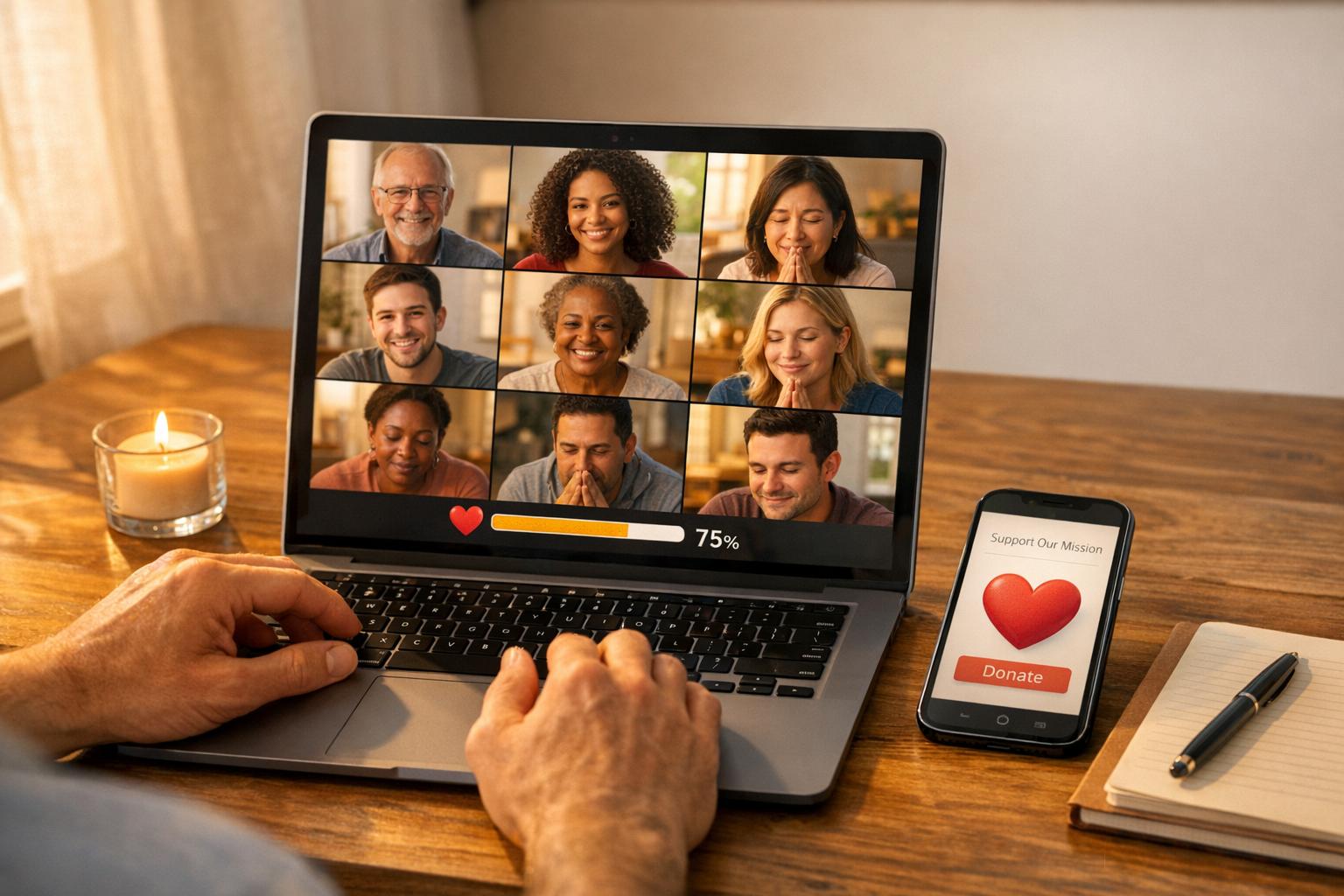
Virtual fundraising is no longer optional for faith-based organizations - it’s a necessary way to connect with donors and support your mission. With online giving making up 13.4% of small nonprofit revenue and faith-based organizations already excelling in donor retention (59%), the shift to digital tools is a natural fit. Whether it’s hosting virtual events, leveraging peer-to-peer fundraising, or building partnerships, these strategies help reduce costs, increase participation, and maintain alignment with your values. Here are 10 practical ideas to make your virtual fundraising efforts more effective:
- Virtual Prayer Marathons: Engage your congregation with prayer while raising funds through sponsorships.
- Online Crowdfunding Campaigns: Rally support for specific goals with platforms like Donorbox or GoFundMe.
- Peer-to-Peer Fundraising: Empower members to fundraise within their networks.
- Live-Stream Worship Events: Reach a broader audience and enable live donations.
- Partner with Local Businesses: Collaborate with companies to support your mission.
- Virtual Game Nights or Trivia: Combine fun with fundraising through interactive events.
- Online Scavenger Hunts or Walkathons: Organize virtual activities to bring people together.
- Virtual Bible Studies with Sponsorships: Blend spiritual growth with fundraising opportunities.
- Video Emails and Social Media Takeovers: Use video to connect with donors, expand your audience, and adapt a donor welcome series for your organization.
- Digital Strategy Support: Work with professional services to optimize your online presence.
These approaches not only simplify fundraising but also build stronger connections with your community. By combining digital tools with faith-based values, you can expand your reach and sustain your mission effectively.

10 Virtual Fundraising Strategies for Faith-Based Organizations
1. Host Virtual Prayer Marathons
Engagement with Faith Communities
Virtual prayer marathons are a powerful way to bring your congregation together, no matter where they are. These events can last anywhere from a few hours to an entire day, with participants signing up for specific time slots to pray while raising funds through sponsorships. This setup works especially well for individuals who might face challenges like illness, childcare responsibilities, irregular schedules, or even time zone differences.
To keep everyone engaged, focus on shared leadership and interactive elements. Assign roles such as hosts, readers, prayer leaders, and tech support to ensure the event runs smoothly. Add spontaneous prayer moments, often called "popcorn prayer", where participants pray as they feel inspired. Combine this with live worship music and real-time interaction through chat or video features. As HolyJot beautifully puts it:
Prayer doesn't need a building - it just needs willing hearts.
This format creates an accessible and meaningful experience while keeping costs low.
Ease of Implementation for Nonprofits
Organizing a virtual prayer marathon is simple and budget-friendly. Platforms like Zoom work well for smaller groups, while Facebook or YouTube Live can accommodate larger audiences. The virtual nature of these events eliminates major costs like venue rentals or catering, ensuring more funds go directly toward your mission.
Start by choosing a clear theme and structure. Focus on specific topics like community healing, global missions, or local revival, and anchor each segment with relevant Scripture. Create giving tiers that resonate with participants. For example, Cedar Creek Ministries introduced a "$28 for 28 days" pledge, where donors received dedicated prayers for pastors throughout the month. Keep the event concise - 30 minutes to a few hours for virtual formats - to hold participants' attention. And don’t skip the dry run to test your audio, lighting, and camera setup.
Potential for Donor Retention and Acquisition
Prayer marathons are a great opportunity to foster long-term donor relationships. Follow the "3-to-1 fundraising" rule: thank donors, share results, and re-engage. Offer recurring donation options and encourage participants to create personal campaign pages using peer-to-peer tools. Recurring donors are especially valuable, with a 90% retention rate and contributing 42% more annually than one-time donors .
To keep the momentum going during the event, use digital thermometers or leaderboards to show progress and spark enthusiasm. This not only boosts participation but also helps you reach new networks through your existing supporters.
Alignment with Faith-Based Values and Missions
Virtual prayer marathons beautifully reflect the scriptural promise: "For where two or three gather in my name, there am I with them" (Matthew 18:20). These events allow you to stay true to your mission while fundraising. Begin with Scripture, share personal testimonies, and include moments for thanksgiving and intercession. Emphasize that all prayers - whether long, short, or silent - are meaningful, helping participants feel comfortable and valued. After the event, follow up by sharing prayer lists and celebrating answered prayers. This transforms the experience from a one-time fundraiser into an ongoing spiritual journey, deepening both community connections and commitment to your mission.
sbb-itb-deea482
2. Launch Online Faith-Based Crowdfunding Campaigns
Engagement with Faith Communities
Online crowdfunding can rally your congregation around shared goals, whether it's funding a mission trip, renovating a sanctuary, or providing emergency relief. This method isn’t just limited to regular attendees - it can reach a wider community that shares your values. Features like virtual donor walls and updates showcasing community contributions can create a ripple effect, encouraging others to participate. To amplify this momentum, offer ready-to-share resources like texts, images, and links. Adding a goal meter can be a game-changer, increasing donations by 35%, and when paired with regular updates, it can boost contributions by up to 126%.
Ease of Implementation for Nonprofits
Modern crowdfunding platforms make setting up a campaign quick and straightforward - often in under 15 minutes. The cost is also manageable. For instance, Donorbox charges a 2.95% platform fee without setup or monthly costs, while GoFundMe takes 2.2% plus $0.30 per transaction. Since 53% of faith-based donors prefer giving via mobile devices, mobile-friendly features are essential. Tools like QR codes on offering plates or bulletins can enable instant donations during services, and digital wallets like Apple Pay and Google Pay simplify the process further. These features not only make giving easier but also build trust and encourage ongoing engagement.
Potential for Donor Retention and Acquisition
Crowdfunding campaigns are a powerful way to attract new donors while deepening connections with existing ones. For example, 46% of millennial donors favor giving through crowdfunding platforms. Take Dorcas Ministries in North Carolina: in November 2020, they pivoted from an in-person Thanksgiving breakfast to a month-long virtual crowdfunding campaign. By using "virtual table captains" and sharing client stories through Facebook, they raised $330,000 - far exceeding their $220,000 goal. Similarly, Germantown Avenue Crisis Ministry turned their $10,000 goal into over $21,000, with nearly 200 donors contributing to their "Neighbors Helping Neighbors Thrive" campaign. These examples highlight how crowdfunding can convert one-time donors into long-term supporters, which is essential for sustained growth.
Alignment with Faith-Based Values and Missions
Faith-based crowdfunding campaigns can resonate deeply when tied to spiritual practices. For instance, "Give it up" campaigns encourage donors to contribute money saved from fasting or skipping daily luxuries during Lent or other religious observances. Timing campaigns around meaningful periods like Advent, Ramadan, or Passover can further strengthen this connection. You can also create donation tiers that reflect your faith, such as a $28 contribution symbolizing 28 days of prayer for a cause. Transparency is key - clearly outlining how the funds will be used, whether for building projects, mission work, or community outreach, ensures donors feel their contributions align with their values and make a meaningful impact.
3. Use Peer-to-Peer Fundraising
Engagement with Faith Communities
Peer-to-peer fundraising takes the idea of community engagement to the next level by empowering congregants to become fundraisers themselves. This method allows your church to extend its reach far beyond its immediate community, as supporters tap into their personal networks. Personal recommendations are powerful, and this approach capitalizes on that trust. For instance, in May 2020, the Giving Initiative for Teens (GIFT) at the Stroum Jewish Community Center of Greater Seattle launched a peer-to-peer campaign aimed at addressing poverty and homelessness. With tools like a leaderboard and a fundraising thermometer, the teens exceeded their goal, raising 109% of their target.
To keep the energy alive, consider incorporating gamification elements. Features like digital badges and leaderboards can spark friendly competition - imagine youth ministry members competing against parents for the top spot! Virtual events, such as read-a-thons, talent shows, or even 5Ks, also allow members who can’t attend in person to participate fully.
Ease of Implementation for Nonprofits
One of the best things about peer-to-peer fundraising is how simple it is to get started. You don’t need a large budget or advanced technical skills. What you do need is a well-prepared toolkit for your fundraisers. This can include social media templates, email scripts, FAQs, and impact statements that reflect your church’s mission and identity. Providing these resources helps volunteers confidently share your message. Plus, branded giving forms make a big difference - donations through these forms are, on average, 38% larger than those made on generic pages.
"Peer-to-peer fundraising allows your top church supporters to fundraise on your behalf and elevate your church fundraising without increasing your effort or fundraising budget."
– Lindsey Baker Bower, Writer and Nonprofit Professional, Donorbox
To ensure everything runs smoothly, assign a staff member or volunteer to manage the campaign. This person can address technical issues, motivate participants, and keep the program on track. Also, make sure your platform is mobile-friendly and supports digital wallets - 25% of donors use mobile devices to give. And don’t forget to follow up with donors promptly. A quick thank-you within 48 hours can make them four times more likely to donate again.
Potential for Donor Retention and Acquisition
Peer-to-peer fundraising is an excellent way to bring in new supporters. In 2023, the top 30 peer-to-peer programs collectively raised $1.1 billion, and this method typically attracts 2–3 times more new donors than other channels. However, retaining those new donors can be a challenge, with an average year-over-year retention rate of just 19.4%. That’s why it’s crucial to have a strong plan for building relationships with these donors from the start.
FishHawk Fellowship Church (FFC) provides a great example. Each year, they run a peer-to-peer campaign to fund mission trips to Pillatre, Haiti. Participants use branded fundraising pages filled with videos and photos of the families they serve. The funds go toward building homes and creating jobs through their partner organization, Welcome Home Haiti. By showing donors exactly how their contributions make a difference, FFC fosters long-term support and strengthens connections between donors and their mission.
Alignment with Faith-Based Values and Missions
Peer-to-peer campaigns naturally align with the values of faith-based organizations, especially when they focus on community-driven goals like mission trips, building projects, or supporting members in need. For example, in fall 2020, Stadia Church Planting organized the "Go the Extra Mile" virtual event. This included a walkathon, runathon, and bikeathon, all tied to a peer-to-peer campaign. Their website featured photos of children in under-resourced communities, helping to connect donors to the impact of their contributions. The event successfully engaged a global audience to support new church establishments.
You can also integrate spiritual elements into your campaigns. For instance, a "Prayer Pledge Drive" could invite donors to give $28, committing your organization to pray for pastors daily for 28 days. Instead of tangible rewards, you could offer recognition during worship services or digital badges for reaching milestones. Just like virtual prayer marathons or crowdfunding, peer-to-peer fundraising directly supports your ministry’s mission - whether it’s spreading the gospel, helping the vulnerable, or building a stronger faith community.
4. Live Stream Worship Events and Concerts
Engagement with Faith Communities
Live streaming has become a powerful way to bring worship to people, no matter where they are. Whether it's families living abroad, elderly members who can't travel, or those recovering from illness, virtual services ensure everyone can participate in community worship. In fact, 87% of churches were still streaming services in 2025, proving this isn't just a passing trend - it’s now a core part of how faith communities stay connected.
The interactive elements of live streaming - like live chat, real-time prayer requests, and commentary - make the experience more engaging. Viewers of live video comment 10 to 20 times more and watch for three times longer compared to pre-recorded content. This format is especially effective for reaching younger generations. For example, 46% of Gen-Z rely on streaming services for video and entertainment, making it a key tool for connecting with the next wave of believers. Beyond just fostering connection, this level of engagement also creates opportunities for digital fundraising.
Ease of Implementation for Nonprofits
Streaming doesn’t have to be complicated or expensive. Small congregations can start with just a smartphone, a tripod, and a basic external microphone. As you gain experience, upgrading to better cameras and audio equipment is an option. But remember, audio quality is critical - viewers are more likely to stop watching due to poor sound than poor video.
Choosing the right platform is another important step. Facebook Live helps you connect with your existing community, YouTube Live is great for reaching new audiences through search, and Zoom is ideal for interactive Bible studies. Many churches now use tools like OneStream Live to stream across multiple platforms at once, maximizing their reach. To avoid buffering during key moments, a wired internet connection is highly recommended.
"Always start with donations/pledges in your goal 'thermometer,' and add a donation button on your website prior to your event to encourage 'pre-commits.' A visual representation of an achievable goal is key for live virtual fundraisers."
– Amy Richter, Executive Director, Music Workshop
Potential for Donor Retention and Acquisition
Live-streamed events don’t just connect people - they also open up new donation opportunities. Virtual services can attract a global audience, including those who might never visit your physical location, such as college students, shift workers, or individuals exploring faith from afar. Churches collectively raised over $2.2 billion through online donations in a single year, showing that virtual attendees are willing to give. The key is to make donating simple. Use integrated donation buttons, text-to-give options, and mobile-friendly platforms - especially since 65% of fundraising traffic comes from mobile devices.
One success story comes from St. Alphonsus Liguori Catholic Church in Chicago. By combining live-streamed masses with mission stories and humor, and using tools like GiveCentral Live to embed streams on their website, the parish raised $63,607 in just three months.
Alignment with Faith-Based Values and Missions
Live streaming aligns perfectly with the mission of inclusivity in faith. It allows you to reach those who are homebound, elderly, or have disabilities, ensuring they remain part of the community. It also supports global missionary work, extending your message far beyond local boundaries. Plus, word-of-mouth promotion for live streams can be five times more effective than paid advertising.
Special events can even generate revenue through ticketed access or pay-per-view models while staying true to your ministry’s mission. Offering tiered ticket options - such as basic access at a lower price and premium packages with perks like digital meet-and-greets or exclusive merchandise - can make these events accessible to a wider audience. Recording and archiving these events creates a lasting resource for spiritual growth and outreach. Additionally, recurring donors recruited through digital platforms tend to stick around, with a 90% retention rate and giving 42% more annually than one-time donors.
5. Partner with Local Businesses Online
Engagement with Faith Communities
Teaming up with local businesses can help your faith community connect with the surrounding neighborhood in meaningful ways. With over 65% of Americans belonging to an organized religion, businesses have strong motivation to collaborate with faith-based organizations. Look for companies that value community engagement or have a focus on social responsibility. For instance, a local café might be a great partner for a food security ministry, while a gym could support youth sports or health initiatives.
Start by building relationships through networking, supporting local events, and staying active on social media. By the time you approach a business with a partnership idea, they’ll already be familiar with your mission and values. These local collaborations can complement your online efforts, broadening your reach and impact.
Ease of Implementation for Nonprofits
Getting started doesn’t have to be complicated. Tools like ShopRaise make it simple. This platform is free for organizations to join and allows your congregation to support your mission through their everyday online shopping - at no extra cost to them. It’s an effortless way to create a steady revenue stream without burdening your team.
For more active campaigns, offer flexible options that appeal to businesses. These might include cash donations, in-kind contributions for virtual auctions, or percentage-of-sale promotions where a portion of sales from specific products or days is donated. Digital sponsorships are another great option, giving businesses visibility on your social media, website, or virtual event platforms. Publicly recognizing these sponsors in newsletters or during online events can deepen their engagement and show appreciation.
Potential for Donor Retention and Acquisition
Partnerships with local businesses don’t just bring in funds - they also help you grow your donor base. Collaborations like these introduce your mission to new audiences. In fact, 80% of donors who contribute to peer-to-peer fundraising campaigns are first-time donors. Partnering with businesses can extend your reach even further, helping you connect with people who may not have encountered your organization otherwise. These new relationships often lead to strong donor retention over time.
"Partnering with local businesses can significantly amplify the reach and success of your fundraising campaign." – Sockable Fundraising
Alignment with Faith-Based Values and Missions
When you work with businesses that share your values, the partnership becomes more than just a fundraising effort - it’s a way to build community and live out your mission. Just as virtual prayer marathons and crowdfunding bring people together, collaborating with local businesses taps into shared connections to amplify your impact. Be sure to research potential partners carefully to ensure their values align with your faith-based mission. These thoughtful partnerships embody principles of stewardship and generosity, echoing the biblical teaching: "Remember this: Whoever sows sparingly will also reap sparingly, and whoever sows generously will also reap generously".
6. Organize Virtual Game Nights or Trivia
Engagement with Faith Communities
Virtual trivia nights are a fantastic way to bring your congregation together, no matter where they are. Platforms like Zoom make it easy to create breakout rooms for team discussions, giving participants a chance to laugh, strategize, and build connections.
You can make these events even more meaningful by tailoring trivia questions to reflect your community's mission. Include topics like your ministry's history, biblical knowledge, or the programs you support. This keeps your organization's purpose front and center while everyone enjoys themselves. For example, Junior Achievement of Greater St. Louis successfully hosts movie-themed trivia nights via Zoom, charging $25 per person, with all proceeds benefiting their students. This approach blends fun with purpose, creating an ideal environment for digital fundraising.
Ease of Implementation for Nonprofits
One of the best things about virtual trivia is how simple it is to organize. With minimal costs and basic video conferencing tools, you can pull off a successful event. To ensure everything runs smoothly, recruit a lively host to keep the energy up and a tech assistant to handle breakout rooms, troubleshoot issues, and tally scores.
To boost fundraising, consider selling "mulligans" for $5–$10, which give teams an extra clue or the correct answer. You can also offer "power-ups" as rewards for teams reaching specific fundraising milestones on their peer-to-peer pages. Peer-to-peer fundraising can double your impact, as organizations using this method typically raise twice as much as those that don't. These strategies make virtual trivia an effective and community-focused fundraising tool.
Potential for Donor Retention and Acquisition
Beyond being fun and easy to set up, these events are a great way to grow your donor base. Use the opportunity to collect email addresses and contact information from new participants for future outreach. Encouraging teams to fundraise before the event taps into their personal networks, bringing in supporters who might not have been connected to your organization before. Over time, these new participants can become loyal donors, and monthly recurring donors have an impressive 90% retention rate.
"Hosting a virtual trivia night fundraiser allows nonprofits to reach a larger audience, offer more benefits to sponsors, and encourage donors to become online advocates for the organization." – Kristine Ensor, Freelance Writer and Nonprofit Professional
Alignment with Faith-Based Values and Missions
Virtual game nights are more than just entertainment - they reflect the fellowship and shared purpose at the heart of faith communities. These events create a welcoming space where members can connect, support one another, and work toward a common goal. By incorporating faith-based themes and mission-driven content, you can reinforce your values while offering a joyful, meaningful experience. Fundraising through these events becomes more than a transaction - it becomes a celebration of generosity and shared purpose, strengthening the bonds within your community.
7. Run Online Scavenger Hunts or Walkathons
Connecting Faith Communities in Meaningful Ways
Online scavenger hunts and virtual walkathons provide interactive and engaging ways to bring faith communities together while raising funds. A virtual walkathon can be designed as a "virtual pilgrimage", where participants symbolically journey to sacred sites or aim to complete a set distance over a period of time. For example, in 2020, Revd Liz Devall, vicar of St John the Evangelist in Hurst Cross, completed a 300-mile virtual pilgrimage during the lockdown to raise money for her church. This approach transforms fundraising into a meaningful spiritual experience that resonates deeply with faith-based values.
Scavenger hunts with faith-based themes can be just as engaging. Create challenges that focus on biblical stories, church history, or even significant local landmarks. Participants might join a live webinar to search for items in their homes or take part in a week-long virtual treasure hunt using tools like Google Maps Streetview. Encourage them to share their progress using a dedicated hashtag, creating a sense of connection and excitement within your digital community. These activities not only foster unity but also simplify the logistics of organizing a fundraiser.
Easy and Affordable for Nonprofits
Organizing virtual events like these is simple and budget-friendly. Without the need for venues or catering, more of the funds raised can directly support your ministry. For scavenger hunts, you can send participants the rules and item lists in advance, then host the event on platforms like Zoom or Facebook Live, where a host can guide everyone through the challenges.
Take inspiration from organizations like the Pancreatic Cancer Action Network in Las Vegas, which transitioned its "PurpleStride" walk to a virtual format in 2020. Participants walked in their own neighborhoods and raised over $172,000 online. This shows how effective virtual events can be, even with minimal overhead costs.
Building and Expanding Donor Networks
Virtual events are also a great way to grow your donor base through peer-to-peer fundraising. When participants create personal donation pages for these events, they reach out to their own networks - friends, family, coworkers - bringing in supporters who might not have known about your organization before. During the pandemic, nonprofits that adopted virtual events saw donation increases of over 30%, and donors recruited through these activities had retention rates of around 90%. Adding features like leaderboards, digital rewards, or prizes for top fundraisers can further encourage participation and support.
Reflecting Faith-Based Values
These events seamlessly align with the core values of faith communities, such as fellowship, perseverance, and stewardship. Virtual pilgrimages echo the spiritual practice of journeying toward sacred goals, while scavenger hunts can incorporate elements like Scripture memorization, acts of service, or gratitude challenges. By blending physical activity with spiritual reflection, these fundraisers become more than just events - they become ministry opportunities. Framing them as shared missions rather than competitions emphasizes collective purpose, reinforcing the values of community and mutual support that are central to faith-based organizations.
8. Host Virtual Bible Studies with Sponsorships
Engagement with Faith Communities
Virtual Bible studies blend spiritual connection with fundraising opportunities, creating a space for both prayer and purpose. These gatherings can help raise funds for needs like service project materials, retreat expenses, or outreach initiatives - all while keeping the focus on Scripture and prayer. They’re especially helpful for including members who might not be able to attend in person due to illness, age, or distance.
For the best experience, keep groups small - around 10 participants - so everyone has a chance to share. Use interactive features like breakout rooms for personal discussions, live chat for prayer requests, and polls to keep participants engaged with both the study and its mission. Since about 50% of invitees typically attend, it’s a good idea to invite twice the number of people you hope to have.
Ease of Implementation for Nonprofits
Hosting virtual Bible studies is straightforward and budget-friendly. Free platforms like Google Meet (offering 60-minute sessions for standard users) or Google Hangouts eliminate the need for a physical venue. You can also save time by using pre-made study guides. Assigning a co-leader to manage technical aspects - like admitting participants or monitoring the chat - frees up the main leader to focus on teaching.
Sponsorships can be seamlessly included. Local businesses with shared values might sponsor guest speakers, provide equipment like webcams or headphones, or contribute supplies for related service projects. To attract sponsors, offer tiered benefits, such as logo placement in promotional materials or shoutouts during the live stream. For example, Cedar Creek Ministries introduced sponsorship tiers where a $28 donation included daily prayers, and a $40 tier offered exclusive prayer cards.
Potential for Donor Retention and Acquisition
Virtual Bible studies can grow your donor base beyond local boundaries. Personal invitations are far more effective than general social media posts for bringing in new participants. Once engaged, many attendees transition into recurring donors. Recurring donors not only have a 90% retention rate but also give 42% more annually than one-time donors. Strengthen these relationships by sending personalized thank-you notes or impact reports that showcase how donations are making a spiritual difference.
Alignment with Faith-Based Values and Missions
This approach aligns perfectly with the values of faith-based communities. Starting each session with prayer ensures that fundraising efforts stay rooted in your mission. Using Bible verses or ministry themes like the "Fruit of the Spirit" in promotional materials can attract sponsors who share similar values. You could also create a "group wallet" to collect sponsored funds for specific charitable causes, turning donations into a shared act of stewardship. Virtual Bible studies not only raise funds but also deepen the spiritual journey, transforming donations into meaningful expressions of faith and community.
How To Increase Online Church Donations (Best Practices)
9. Use Video Emails and Social Media Takeovers
As virtual events continue to grow in popularity, adding video communication and social media takeovers to your strategy can help expand your reach and strengthen your fundraising efforts.
Engagement with Faith Communities
Video emails bring a personal touch to crowded inboxes. Research shows that people remember 95% of a message when they see it in a video, compared to just 10% when reading text. For faith communities, this means leaders can connect with supporters in a more meaningful way - even through a screen. A short, personalized 30-60 second video can welcome first-time visitors and make them feel appreciated during the crucial period when they’re deciding if your church is the right fit.
Social media takeovers offer another way to engage by allowing your church to "take over" the account of a business, sponsor, or influencer for a set time to promote your fundraiser. These collaborations let you tap into new audiences, and their followers are more likely to connect with your mission when they see the authenticity of your message. Including a video thumbnail in your posts can increase click-through rates by up to 40%, turning casual viewers into active participants.
Ease of Implementation for Nonprofits
Getting started with video emails is easier than you might think. All you need is a smartphone or laptop and free tools like Loom or Bonjoro. Keep your videos short - 30–90 seconds for personal messages and 2–5 minutes for sharing your vision - and focus on being genuine rather than overly polished. Congregations tend to prefer simple, heartfelt videos recorded in familiar settings like an office or home. Just make sure the audio is clear, as sound quality is more important than video perfection.
For social media takeovers, provide your partner with a straightforward content kit. Include a brief description of the fundraiser, a clear call-to-action, donation page links, and shareable graphics made with free tools like Canva. Set a specific timeframe - whether it’s a few hours, a day, or a week - to create urgency and encourage focused engagement. These small steps can help you make the most of video and social platforms to connect with donors on a deeper level.
Potential for Donor Retention and Acquisition
Video emails are particularly effective for donor retention. They allow you to maintain engagement during the critical 117-day window between a donor’s first and second gift. AI-powered tools can even help draft personalized emails based on previous donor interactions, making it possible to scale these efforts without losing the personal touch.
Social media takeovers, on the other hand, can introduce your message to entirely new audiences. They allow you to reach beyond your usual Sunday crowd and connect with people you might not otherwise encounter. For example, Dorcas Ministries in North Carolina shifted its annual Thanksgiving Breakfast to a month-long virtual fundraiser in late 2020. By using Facebook to share client stories, inviting donors to act as "virtual table captains", and leveraging social media sharing, they surpassed their $220,000 goal and raised $330,000.
Alignment with Faith-Based Values and Missions
"In a world that feels increasingly disconnected, video allows you to look someone in the eye (even through a screen), speak their name, and remind them that they matter to you and to God." - Kenny Jahng, Editor-In-Chief, ChurchTechToday
Video communication transforms fundraising from a simple financial transaction into an opportunity for deeper connection and gratitude. Personalized thank-you videos and impact stories align with the relational focus that’s central to ministry work. To maximize the impact of each video email, include a clear call-to-action - whether it’s replying, signing up, or donating - and address recipients by name whenever possible. These small touches can make a big difference in how your message resonates.
10. Work with Share Services for Digital Strategy
Engaging Faith Communities Online
Virtual events have shown their worth, but a well-executed digital strategy can take your fundraising to the next level. For faith-based nonprofits, this is especially crucial since only 55% of U.S. adults attend services a few times a year. Share Services steps in to bridge this gap with digital fundraising tools tailored for organizations earning between $1 million and $20 million annually. Their campaigns - covering email, social media, and paid ads on platforms like Meta and Google - are designed to connect with congregants where they’re most active online.
Simple Setup for Nonprofits
Worried about upfront costs or needing a tech expert? Share Services makes it easy. They operate on a monthly retainer model, breaking down services into manageable packages: strategy sessions at $3,500, implementation services (like donation pages and email campaigns) at $3,000, and paid media campaigns starting at $1,500. This structure helps mid-sized nonprofits grow their digital presence without overloading their teams or budgets.
Strengthening Donor Relationships
Share Services doesn’t just focus on getting donations - they aim to keep donors engaged. Their donor retention strategies highlight the value of recurring donations. Automated tools for stewardship and recurring giving programs help build lasting relationships. Plus, their peer-to-peer fundraising features let congregants create personal campaigns, encouraging donations through trusted, personal networks.
Staying True to Faith-Based Missions
"Giving is deeply personal, and for faith-based nonprofits, it is often fuelled by shared religious or moral convictions... Their contributions are more than just financial - they are an extension of their faith."
- Abigail Morse, Content Manager, Virtuous
Conclusion
Virtual fundraising has become a key strategy for faith communities in today’s digital-first world. With only 55% of U.S. adults attending religious services a few times per year, engaging supporters online is no longer optional - it’s essential.
Shifting to digital platforms eliminates hefty costs like venue rentals and catering, while also enabling participation from anywhere in the world. This approach not only cuts expenses but creates more inclusive opportunities for giving. The result? A stronger connection between donors and the mission they support.
By leveraging tools like peer-to-peer campaigns, text-to-give options, and live-streamed events, faith-based nonprofits can do more than just raise funds - they can foster meaningful relationships with their supporters year-round.
"Virtual fundraising events not only make it possible to stay connected to your donor base through trying times, but they also enable your organization to reach a much broader audience than before."
- GrowthForce
For organizations looking to refine their digital strategy, Share Services offers structured solutions. Their monthly retainer packages start at $1,500 for paid media campaigns, $3,000 for implementation, and $3,500 for strategy sessions. These plans are designed to turn occasional supporters into committed, recurring donors.
The ten tips shared here serve as a practical guide, but the true key to success lies in consistent effort and authentic engagement. Whether through creative events like prayer marathons or partnerships within the community, these strategies ensure your supporters remain inspired and ready to give.
FAQs
Which virtual fundraiser should we start with first?
Start by organizing a virtual event tailored to your community's preferences and the resources you have available. Options like a virtual gala or a live-streamed event work well because they use live streaming and interactive features to engage donors effectively. To make it more engaging, consider adding activities such as raffles, live donation appeals, or online auctions. Keeping the event free and easy to access can help attract a larger audience and create excitement, laying the groundwork for future fundraising initiatives.
What tools do we need for online giving and events?
To make online giving and virtual events successful, you'll need the right tools. These include online donation platforms like donate buttons, forms, and personalized pages, text-to-donate services, and live streaming platforms such as Zoom or YouTube Live. Additionally, tools for auctions and raffles, interactive engagement features like polls or live feeds, and event management software for handling registrations and follow-ups are key. Together, these tools help create smooth and engaging virtual fundraising experiences.
How do we turn one-time donors into recurring givers?
Building a program that encourages recurring donations starts with a few essential strategies. First, secure support from leadership and involve enthusiastic early adopters to set the tone. Offering flexible donation options is another important step - make it easy for donors to choose what works best for them. On top of that, invest in user-friendly technology to streamline the process and remove any barriers.
Keep donors engaged by sharing regular updates that show the real-world impact of their generosity. Personal recognition goes a long way too - acknowledge their contributions in a meaningful way. Finally, tie the act of giving to spiritual values or a deeper sense of purpose. These steps help create strong, lasting donor relationships, turning one-time contributors into loyal, recurring supporters.
Related Blog Posts
Get helpful resources, straight to your inbox
We love sharing tools, ideas, and stories that make nonprofit work a little lighter and a lot more effective. Sign up below and we’ll send you practical tips, free resources, and a bit of encouragement—because the work you’re doing matters.
No spam. Just good stuff for good people.