
Feb 17, 2026
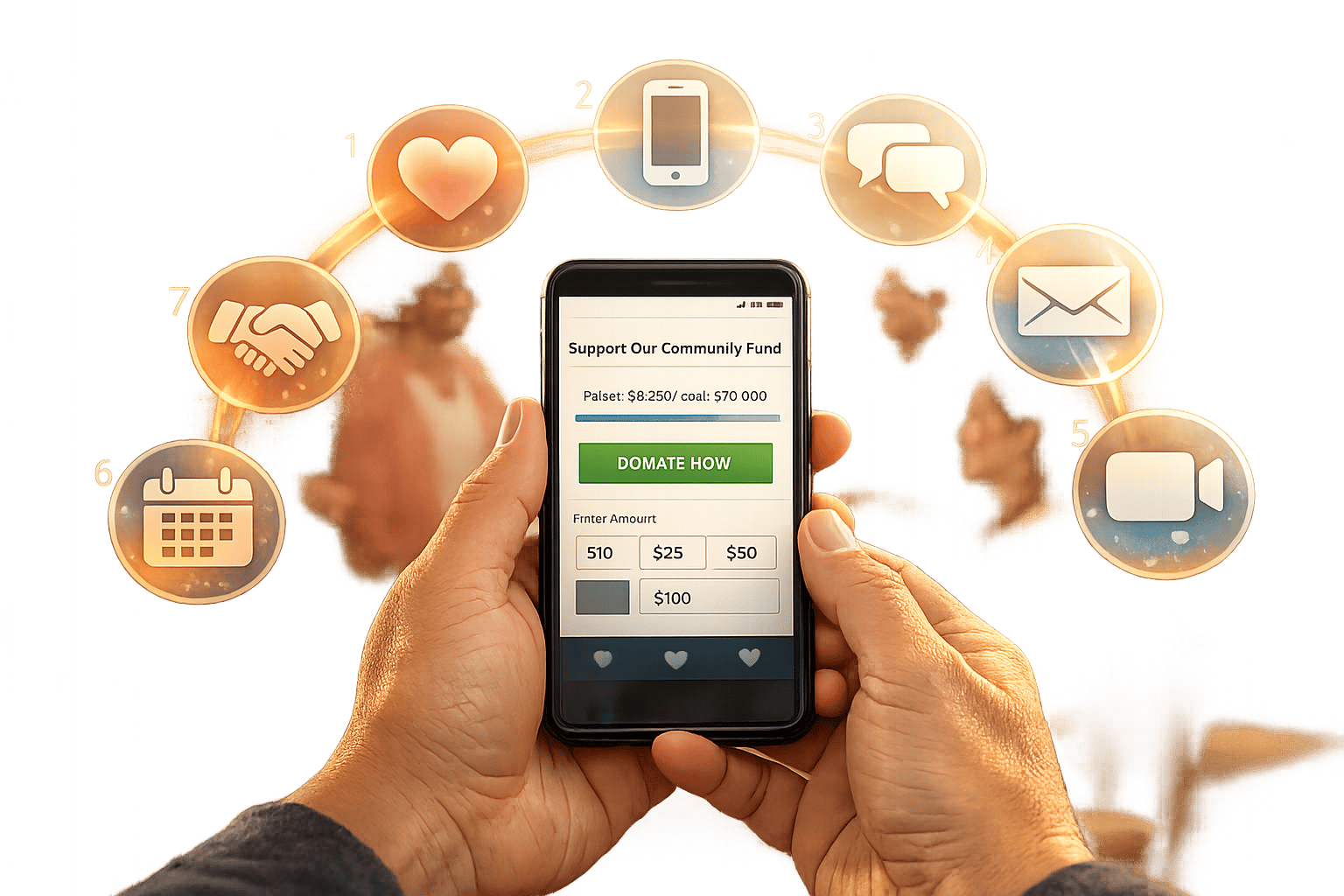
7 Steps to Engage Faith Communities in Crowdfunding
Crowdfunding can help faith-based organizations fund mission trips, repairs, or programs without overburdening their congregation. The key? A clear plan that combines storytelling, technology, and community engagement. Here's a quick breakdown:
- Tell Stories: Share personal, faith-driven stories to connect emotionally with donors.
- Choose the Right Platform: Use mobile-friendly tools with features like text-to-give, recurring donations, and visual progress trackers.
- Design a Strong Campaign Page: Include visuals, goal thermometers, and clear calls to action.
- Use Multiple Outreach Channels: Combine emails, service announcements, and mailers to reach all age groups.
- Leverage Social Media: Post updates, share stories, and encourage your community to spread the word.
- Host Virtual Events: Engage supporters through online galas, prayer drives, or live worship nights.
- Get Expert Help: Partner with professionals to refine your strategy and improve results.
These steps can help you raise funds while strengthening your community and achieving your mission.

7 Steps to Engage Faith Communities in Crowdfunding
Crowdfunding for Nonprofits (Strategies for Successful Nonprofit Crowdfunding Campaigns)
sbb-itb-deea482
Step 1: Create Stories That Reflect Your Faith
Facts alone won't carry your crowdfunding campaign to success. People give when they feel emotionally connected to something bigger than themselves. That’s why storytelling - grounded in shared faith values - can make all the difference.
Connect Campaigns to Your Core Values
Start by framing the need in relatable, human terms. For example, instead of simply explaining that the HVAC system is broken, describe how it affects real people: children missing summer programs or elders unable to attend services during extreme heat. Shift the focus from the infrastructure itself to the lives it impacts.
Tie your campaign directly to your mission statement and invite supporters into a shared journey of stewardship and renewal. As Matt Vuorela, CEO of Steier Group, puts it:
"Faith-based campaigns succeed when they move beyond simply asking for money and instead invite people into a shared mission of stewardship and renewal."
When donors see how a project supports faith-driven principles - like compassion, community service, or outreach - they’re more likely to contribute. This is especially true for younger donors: 27% of Gen Z's donations and 26% of Millennials' donations go to religious organizations. They want to see faith in action, making a tangible difference.
Breaking down the impact into measurable goals, such as "$25 provides meals for one family", makes the mission feel achievable. This approach not only clarifies the purpose of your campaign but also sets the stage for deeper engagement, which will be explored in the next steps. By connecting faith to real-world needs, you prepare your community for the personal stories that will bring your mission to life.
Share Testimonies and Personal Stories
Once you’ve established your campaign’s values, personal testimonies can add a powerful emotional layer. A single heartfelt story often resonates more than a list of statistics. Zach Leighton, Principal Creative at Reliant, highlights that authentic testimonies showcase personal conflict and transformation, focusing on heart change and God’s redemptive work - not just as a fundraising tool.
Real stories build trust far better than overproduced content. Make it easy for your community to share their experiences by setting up a simple system, like a digital form on your website or a dedicated email inbox. Collect a variety of stories - from salvation experiences to community impact and volunteer highlights - to demonstrate the life-changing work your ministry is doing.
When crafting these stories, follow a clear structure: introduce the problem, share the individual’s background, highlight the urgency, explain your ministry’s role, and show the resolution. Always close by showing how generosity made the transformation possible and invite others to join in writing the next chapter of your ministry’s story. These personal accounts can inspire and energize your supporters, making them feel like an essential part of your mission.
Step 2: Choose the Right Crowdfunding Platform
Picking the right platform can make or break your crowdfunding efforts. A poorly designed system with confusing navigation or limited features can discourage donors and stifle your campaign. Instead, you need a platform that's simple to use, aligns with your community's values, and offers tools to effectively engage your supporters.
Features to Look For
Since most people donate through their smartphones - whether during services or while browsing social media - a mobile-first design is a must. Look for features like Text-to-Give (or Text-to-Tithe) and QR codes that can be printed on offering plates or bulletins. These allow for quick, cashless donations with just a scan.
To build excitement and momentum, choose a platform that includes social proof tools like virtual donor walls, fundraising thermometers, and the option for subscriptions. These features keep donors engaged and informed.
Recurring donation options are another key feature. Weekly or monthly tithing not only provides a steady revenue stream but also strengthens long-term support. In fact, recurring donors are shown to contribute 42% more annually compared to one-time donors and have a 90% retention rate.
Platforms with peer-to-peer fundraising capabilities can help you expand your reach. These allow congregants to create their own sub-campaigns and invite friends or family to contribute, multiplying your impact.
Other essential features to prioritize include:
- Customizable branding (logos, colors, and imagery that reflect your community)
- Multiple payment options (credit cards, Apple Pay, Venmo, etc.)
- Automated thank-you emails to acknowledge every gift.
As Heather Karellas from Donorbox says:
"Small donations, when combined together and shared with enthusiasm, can create transformational results."
By choosing a platform with these tools, you'll combine modern technology with your community's mission, ensuring a seamless experience for donors.
Set Up Your Platform for Success
Once you've selected the right platform, it's time to configure it for maximum engagement. Start by setting specific, tangible goals rather than broad financial targets. For example, instead of asking for "$50,000 for ministry expenses", break it down into smaller campaigns like "$15,000 for a youth mission trip" or "$8,500 to repair the fellowship hall roof." Adam Copeland, Director at the Center for Stewardship Leaders, explains:
"Crowdfunding thrives on 'micro goals,' specific, often time-sensitive, visions of something new."
These focused campaigns make each donation feel impactful and give donors confidence that their contributions are going toward clear, meaningful purposes.
Your campaign page should also be visually appealing and easy to navigate. Use high-quality images or videos that showcase your congregation in action, highlighting the real-world impact of your work. Set a realistic deadline to create urgency - most successful campaigns last between 4 and 9 weeks. Include a visible goal meter so visitors can instantly see how close you are to reaching your target.
Real-world success stories illustrate the power of these strategies. In November 2020, Dorcas Ministries in North Carolina transitioned from an in-person Thanksgiving Breakfast to a month-long virtual gala. Using a customizable platform, they tracked both online and offline donations and organized virtual table captains for peer-to-peer outreach. The result? They raised $330,000, far exceeding their $220,000 goal. Similarly, St. Mary and St. Antonio's Coptic Church in Glendale, New York, used GoFundMe's social sharing features in November 2025 to raise $3,240 for a special needs Sunday school class, surpassing their target.
Finally, don't overlook the small but crucial technical details. Add QR codes to printed materials for instant donations and include social media sharing buttons to make it easy for supporters to spread the word. These details can make a big difference in the overall success of your campaign.
Step 3: Design a Campaign Page That Motivates Giving
A well-thought-out campaign page can turn curiosity into action. The difference between a page that barely meets its goal and one that surpasses expectations often lies in how effectively it conveys your mission and demonstrates the impact of donations. By building on the emotional stories shared earlier, your campaign page can inspire meaningful contributions.
Use Visuals and Progress Trackers
Visual elements and progress indicators can significantly boost engagement. Focus on showcasing the individuals your ministry serves rather than just facilities or equipment. Faces and personal stories create an emotional connection, encouraging donors to contribute and share the campaign with others. For a polished look, use images sized at 2,000×1,200 pixels for your main campaign photo and 1,200×700 pixels for impact stories.
A goal thermometer is a simple yet powerful addition to your page. This real-time visual tracker shows how close you are to reaching your goal, which can motivate people to give. Studies reveal that incorporating a goal meter can increase donations by an average of 35%. Pair this with a countdown clock to add urgency - knowing time is limited often prompts immediate action.
Consider adding a virtual donor wall to highlight recent contributions and comments from supporters. This not only acknowledges donors but also encourages others to join in, thanks to the "bandwagon effect". Regular updates are equally vital. Campaigns that share updates every five days - whether through photos, videos, or progress reports - raise three times more than those that don’t. In fact, campaigns with consistent updates see 126% more donations overall.
Combine these visuals with clear and compelling calls to action to maximize donor participation.
Write Calls to Action That Resonate
A strong call to action invites people to become part of a shared purpose. Matt Vuorela, CEO of the Steier Group, puts it this way:
"Faith-based campaigns succeed when they move beyond simply asking for money and instead invite people into a shared mission of stewardship and renewal."
Use language that aligns with your community’s values. Phrases like "God’s work", "discipleship", and "stewardship" resonate deeply with faith-based audiences, framing donations as acts of worship rather than mere financial support. Be direct and confident in your request. Instead of saying, "We hope you might consider donating", opt for something like, "Join us in reaching our goal by giving $50 to provide meals for 10 families."
Link donation amounts to specific outcomes so supporters can see the tangible impact of their contributions. For instance, "Each $200 donation purchases one new chair for our auditorium" paints a clear picture of how their gift will make a difference.
Step 4: Reach Your Community Through Multiple Channels
A thriving crowdfunding campaign taps into various outreach methods to connect with everyone in your faith community. Since your audience spans different age groups and levels of tech familiarity, it's essential to meet people where they are. By combining digital tools like email with traditional approaches such as service announcements and physical mailers, you can create a well-rounded plan that ensures no one is overlooked. These efforts work hand-in-hand with a compelling campaign page and powerful storytelling to maximize your reach.
As Ecclesiastical puts it:
"Communication is a cornerstone of fundraising. Communicating the right message, in the right way, to the right person can pave the way to a donation now or in the future".
Use Email Campaigns and Newsletters
Email is a powerhouse when it comes to keeping supporters engaged. In fact, email marketing is 34% more effective than other outreach methods for crowdfunding campaigns. To make the most of it, segment your email list based on factors like life stage, involvement in church activities, or past giving history. This allows you to tailor your messages - for example, families with young children might connect with stories about youth programs, while long-term members may appreciate updates on building renovations.
Focus on storytelling rather than simply listing project details. Share heartfelt testimonies from members impacted by your ministry, highlight volunteers, or include prayer requests that showcase the human side of your mission. As Lauren Dowdle from Robly explains:
"A church isn't a building - it's the people in it. Share their stories, updates and prayer requests with the entire organization".
Tie specific donation amounts to real outcomes to help supporters visualize their impact. For instance, "A $200 gift provides one new chair for the youth auditorium". Stick to a consistent schedule - whether weekly or biweekly - for sending newsletters. This builds trust and keeps your campaign top of mind. Celebrate milestones like hitting 50% or 75% of your goal with special updates, as campaigns that provide regular updates receive 126% more donations. You can also include a snapshot of your virtual donor wall to offer social proof and recognize recent contributors.
Every email should feature a clear "Give Now" button that links to your mobile-friendly donation form. Test your emails on smartphones to ensure they look great, and personalize the "From" field with a pastor’s or church leader’s name to boost open rates and foster trust.
While email is a powerful tool, traditional methods ensure your campaign reaches everyone in your community.
Promote During Services and Through Mailers
Not everyone is comfortable with digital tools, so in-person promotion during worship services is crucial. When a pastor or leader announces your crowdfunding project from the pulpit, it creates a sense of shared purpose and urgency.
Place QR codes in high-visibility areas like printed bulletins, posters near entrances, and even on offering plates. This makes it easy for congregants to scan and donate instantly, even if they don’t carry cash. Use sanctuary screens during services to show your fundraising thermometer and text-to-give info. Real-time updates on progress encourage participation and simplify giving via text message.
For older members who prefer tangible communication, physical mailers remain an effective option. Send direct mail appeals that echo the compelling stories and specific donation requests from your emails. Include QR codes or website links so recipients can quickly access your donation page. After the campaign wraps up, mail impact summaries showing exactly how funds were used - whether it’s starting a repair project or purchasing new equipment. This transparency builds trust for future campaigns.
Don’t forget to include visitors. Provide brochures at entrances with contact details or your campaign URL to extend your reach beyond regular attendees and connect with the wider community your ministry serves.
Step 5: Use Social Media to Expand Your Reach
Social media has become an indispensable tool for spreading the word about your crowdfunding campaign. With 9 out of 10 internet users logging into social platforms monthly and Americans spending an average of 2.08 hours daily scrolling, these platforms offer a massive opportunity to amplify your message. But social media isn’t just about broadcasting - it’s a space where conversations happen, allowing you to connect with people on a personal level and share the mission behind your work.
Different platforms serve different purposes. Facebook is ideal for sharing updates, organizing events, and live-streaming. Instagram shines with visual storytelling, especially for younger audiences. Twitter works well for short, impactful messages and hashtag campaigns, while TikTok and Snapchat are great for engaging youth with fun, creative videos. Considering that Millennials spend about 3.8 hours on social media daily and Gen Z averages 4.5 hours, meeting your audience where they already are can dramatically boost your campaign’s reach.
The Power of Visual Content
Visuals can make your campaign more engaging. A great example is Well Aware’s "Shower Strike" campaign, where volunteers pledged not to shower for a week and shared their stories on Facebook with the hashtag #showerstrike. This creative approach raised over $130,000 in just one week for clean water projects in East Africa, with personal Facebook pages driving the majority of donations. This kind of dynamic content invites interaction and keeps your audience engaged.
Post Regular Updates and Stories
Keeping your campaign visible means posting consistently. On Facebook, aim for 1–2 posts a day, while Instagram performs best with 3–7 posts per week. But it’s not just about frequency - your posts need to tell stories that connect emotionally with your audience.
A good rule of thumb is the 80/20 rule: dedicate about 80% of your posts to informing, educating, or sharing stories, and only 20% to directly asking for donations. Share scripture, photos from events, volunteer highlights, or behind-the-scenes moments. For instance, Islamic Relief USA created a "Ramadan Reflections" series on YouTube, featuring tips on productivity and spirituality. They promoted these videos on Facebook using the hashtag #Nafshacks and encouraged email subscriptions to expand their reach.
Live video is another powerful tool for creating real-time connections. Use platforms like Facebook Live or YouTube to stream services, host Q&A sessions with church leaders, or share campaign updates. This approach allows even those who can’t attend in person to feel involved. Amy Hooper from TechSoup sums it up well:
"Social media is a great storytelling tool - use it to show what's happening in your organization!"
Create a branded hashtag for your campaign - something like #MissionTrip2026 or #NewSanctuaryFund - so supporters can easily find and follow related updates. Celebrate milestones when you hit 25%, 50%, or 75% of your goal by sharing updates and screenshots of your virtual donor wall. Campaigns that provide regular updates receive 126% more donations.
Ask Your Community to Share
Your community’s support can make all the difference. When congregants share your campaign, their personal endorsements often carry more weight than official posts. This kind of peer-to-peer sharing can encourage others to get involved.
Make it easy for them by providing a social media packet with sample text, high-quality images, and direct donation links. For example, during a recent campaign, hourly posts and retweets of personal stories significantly boosted engagement.
Encourage younger members to create short TikTok or Instagram videos explaining why they support the campaign and linking to their personal fundraising pages. These authentic, heartfelt testimonials often resonate more with viewers than polished promotional content. Dorcas Ministries demonstrated this during their virtual Thanksgiving gala in 2020. They enlisted "virtual table captains" to share client stories on Facebook, which helped them exceed their fundraising goal.
Don’t just post and vanish - engage with your audience. Respond to comments, thank people for sharing, and interact with related organizations to expand your network. Keep an eye on campaign-related hashtags and keywords, and actively participate in the conversation. By using these strategies, you can maximize community involvement and take your campaign to the next level.
Step 6: Host Virtual Events for Your Faith Community
Virtual events have become a powerful way to engage faith communities, bringing people together in real time without the need to leave their homes. They create opportunities to connect, share, and support your mission in a meaningful way. A great example of this is the Ronald McDonald House Charities of Chicagoland and Northwest Indiana, which hosted a two-hour Facebook Live gala in November 2020. This event cost just $35,000 to produce - far less than the $300,000 typically spent on in-person galas - and raised an incredible $800,000. By going virtual, they eliminated venue restrictions and welcomed unlimited attendance.
One of the biggest advantages of virtual events is their flexibility. You can meet your supporters where they already are - on platforms like Facebook Live, Zoom, or YouTube - making it easy for them to participate, no matter their location or schedule. Plus, without the need for venue rentals, catering, or additional staff, you can allocate more of your resources toward your mission.
Types of Virtual Events to Consider
There are plenty of virtual event formats to suit different goals. For instance, a virtual gala can replicate the feel of a traditional fundraising dinner, complete with speeches, testimonials, and musical performances. Dorcas Ministries in North Carolina used this approach for their 2020 Thanksgiving fundraiser, recruiting "virtual table captains" to share client stories on Facebook. The result? They surpassed their $220,000 goal, raising $330,000 in total.
If you're looking for something more faith-focused, consider prayer pledge drives, where supporters commit to daily donations (like $1 per day) in exchange for a month of dedicated prayers for specific causes or leaders. Another option is hosting virtual worship nights or concerts, combining live music with real-time donation requests. Or try peer-to-peer challenges, such as gingerbread house contests or fitness challenges, where participants set up personal fundraising pages and share them with their networks.
Activity-based events like virtual walkathons are also effective, especially for engaging families and youth groups. Participants can log their steps or miles remotely while raising funds. You might also organize viewing parties, where supporters watch mission-related documentaries together online, with tickets sold as voluntary donations.
Once you've chosen your event format, the next step is to make donating as seamless as possible. This includes following up with new supporters using a donor welcome series to build long-term relationships.
Include Donation Opportunities in Events
To maximize contributions during your virtual events, offer multiple ways for attendees to donate in real time. Embed your livestream on your fundraising page and include a prominent "Donate" button. Add on-screen QR codes and text-to-give options so participants can give instantly from their phones.
You can also encourage giving by featuring donor names live on-screen or using a virtual donor wall to showcase recent gifts and comments. This approach has been shown to boost donations by as much as 35%. For example, the Germantown Avenue Crisis Ministry doubled their $10,000 goal during their 2020 campaign, raising over $21,000 from nearly 200 donors by enabling recurring giving on their donation page.
Throughout your event, make regular appeals that tie donations to specific outcomes. Start your livestream early with a countdown timer and pre-recorded content to build anticipation. And don't forget to conduct a technical rehearsal at least a week before going live to ensure everything runs smoothly.
Step 7: Work with Experts to Improve Your Campaign
Running a crowdfunding campaign successfully takes more than just enthusiasm and a great idea. It demands careful planning, technical know-how, and constant refinement. While your community brings the passion, teaming up with fundraising experts can help you sidestep common mistakes and boost your results. Think of professional services as tools to amplify your efforts, helping you expand your reach and deepen community engagement without overspending.
Experts can take you beyond cookie-cutter strategies that often fall flat with faith-based audiences. They use proven methods, like the "Digital Discipleship Funnel", to guide supporters from initial interest to long-term involvement. They’ll also focus on optimizing your website to ensure it’s fast, mobile-friendly, and easy to navigate - key factors in keeping visitors engaged and encouraging donations.
How Share Services Supports Faith-Based Nonprofits
Professional expertise can make the difference between a good campaign and a great one. Share Services specializes in helping nonprofits, particularly those with annual revenues between $1 million and $20 million, achieve their fundraising goals. Their services focus on digital fundraising, crafting brand messaging, retaining donors, and acquiring new supporters - all critical elements for a thriving crowdfunding campaign.
Share Services provides expert coaching and tools to help you scale your efforts. They can assist with SEO, managing paid media campaigns, and leveraging tools like Google Ad Grants, which can provide valuable advertising opportunities. By closely tracking metrics such as bounce rates, email open rates, and cost per donation, they enable real-time adjustments to your strategy for better results.
Compare Share Services Plans
Here’s a breakdown of the plans Share Services offers, tailored to meet the digital fundraising needs of nonprofits:
| Plan Name | Monthly Investment | Included Services | Best For |
|---|---|---|---|
| Strategy Retainer | $3,500 | Nonprofit strategist, weekly strategy sessions, project management, KPI reporting | Organizations seeking comprehensive guidance and ongoing support |
| Monthly Project Budget | $3,000 | Donor programs, email marketing, branding, graphic design, web design, copywriting, donation pages, conversion optimization | Nonprofits focused on enhancing their digital presence |
| Paid Media Spend | $1,500 | Meta ads, OTT ads, Google Ad Grant management, analytics, donor acquisition campaigns | Organizations looking to expand their reach through targeted advertising |
These plans can be used individually or combined, depending on where your organization needs the most help. Together, they provide a mix of expert strategy, creative execution, and targeted advertising. For example, implementing features like goal thermometers can increase giving by an average of 35%, while regular campaign updates can lead to 126% more donations.
Conclusion
The seven steps outlined here provide a solid framework to elevate your crowdfunding efforts. Engaging your faith community in crowdfunding goes beyond simply raising funds - it's about creating a movement centered on shared values and clear, meaningful goals. Together, these steps take scattered efforts and turn them into a unified strategy that connects your congregation while expanding your reach well beyond the church walls. By blending authentic storytelling, effective technology, multiple communication channels, and professional support, you can foster an environment where giving feels both natural and impactful.
Statistics back up these strategies. For example, incorporating a goal meter can increase donations by 35%, while providing regular updates has been shown to boost contributions by an impressive 126%.
"The key to crowdfunding or online fundraising isn't asking for money. It's not aiming for the wealthy 1%. But instead, it's about building and engaging a community of followers." - CauseVox
These steps don't just inspire one-time donations - they help cultivate lasting relationships with your supporters. By fostering two-way communication, sharing stories about the impact of donations, and offering options for recurring giving, you lay the groundwork for long-term support. This approach ensures you're not just funding a single project but building a sustainable future for your ministry. Partnering with expert services like Share Services, which specializes in digital fundraising for faith communities, can further refine these strategies and help you form deeper connections with your donors.
Start with one step, track your progress, and use the data to fine-tune your approach. Whether your goal is funding a mission trip, renovating a building, or supporting ongoing ministry operations, these actionable steps provide a roadmap for success. They empower your ministry while strengthening your community’s sense of purpose and commitment.
FAQs
How do we set a realistic crowdfunding goal and deadline?
When setting a fundraising goal, it’s essential to strike the right balance between ambition and feasibility. Look at past fundraising data, assess donor capacity, and review giving patterns. This helps you pinpoint a target that’s challenging yet attainable.
For your campaign timeline, aim for a duration of 30 to 60 days. This creates a sense of urgency while avoiding donor fatigue. Preparation is key - start planning at least a month before your launch. During this time, work to secure 30-50% of your goal in advance. Achieving this early momentum can inspire confidence and encourage others to contribute.
Leverage data-driven insights throughout your campaign to fine-tune your strategy and boost your chances of success.
What should we track to know if our campaign is working?
To truly understand how well your campaign is performing, focus on tracking key metrics such as:
- Online donation rate: How often visitors to your site convert into donors.
- Average gift size: The typical amount given per donation.
- Donor retention rate: The percentage of donors who continue giving over time.
- Website page views: How much traffic your campaign is attracting online.
- Giving patterns: Trends in when and how people donate.
- Donor demographics: Who your donors are, including age, location, and other characteristics.
- Giving methods: The ways donors prefer to contribute, like credit cards, PayPal, or other platforms.
By analyzing these insights, you can measure your campaign's success and pinpoint areas that need improvement.
How do we keep donors engaged after the campaign ends?
To keep donors interested and invested, it's important to stay in touch regularly and show heartfelt appreciation. Consider sending personalized thank-you notes or even short, thoughtful videos to express your gratitude. Share updates that highlight the difference their contributions are making - like project milestones or inspiring success stories.
You can also invite donors to participate in future campaigns, events, or volunteer opportunities. Publicly acknowledging their support on platforms like social media can go a long way in making them feel valued. When donors see consistent appreciation and the impact of their generosity, they’re more likely to stay connected and become long-term supporters.
Related Blog Posts
Get helpful resources, straight to your inbox
We love sharing tools, ideas, and stories that make nonprofit work a little lighter and a lot more effective. Sign up below and we’ll send you practical tips, free resources, and a bit of encouragement—because the work you’re doing matters.
No spam. Just good stuff for good people.