

Dec 22, 2025
Nonprofit CRM Features for Donor Engagement Automation
Nonprofit organizations are increasingly turning to CRM platforms to automate donor engagement. These tools help manage donor relationships, streamline communications, and improve retention through features like personalized messaging, real-time analytics, and workflow automation.
Here’s what you need to know:
- Why it matters: Automation saves time, reduces manual tasks, and ensures consistent donor outreach.
- Key features to look for: Multi-channel communication (email, text, social media), donor segmentation, AI-driven insights, and integration with tools like accounting software or matching gift platforms.
- Top platforms: Options range from budget-friendly tools like DonorDock and DonorPerfect to advanced systems like Virtuous and Giveffect.
- Challenges: Choosing the wrong CRM can lead to wasted resources and poor donor experiences, so aligning features with your nonprofit's size and goals is critical.
Quick Tip: Start with a free trial to test how well a platform fits your team’s needs before committing. Below, we’ll explore 10 leading CRMs, their features, pricing, and suitability for U.S. nonprofits.
The Best Nonprofit CRM Solutions for 2024
1. DonorPerfect
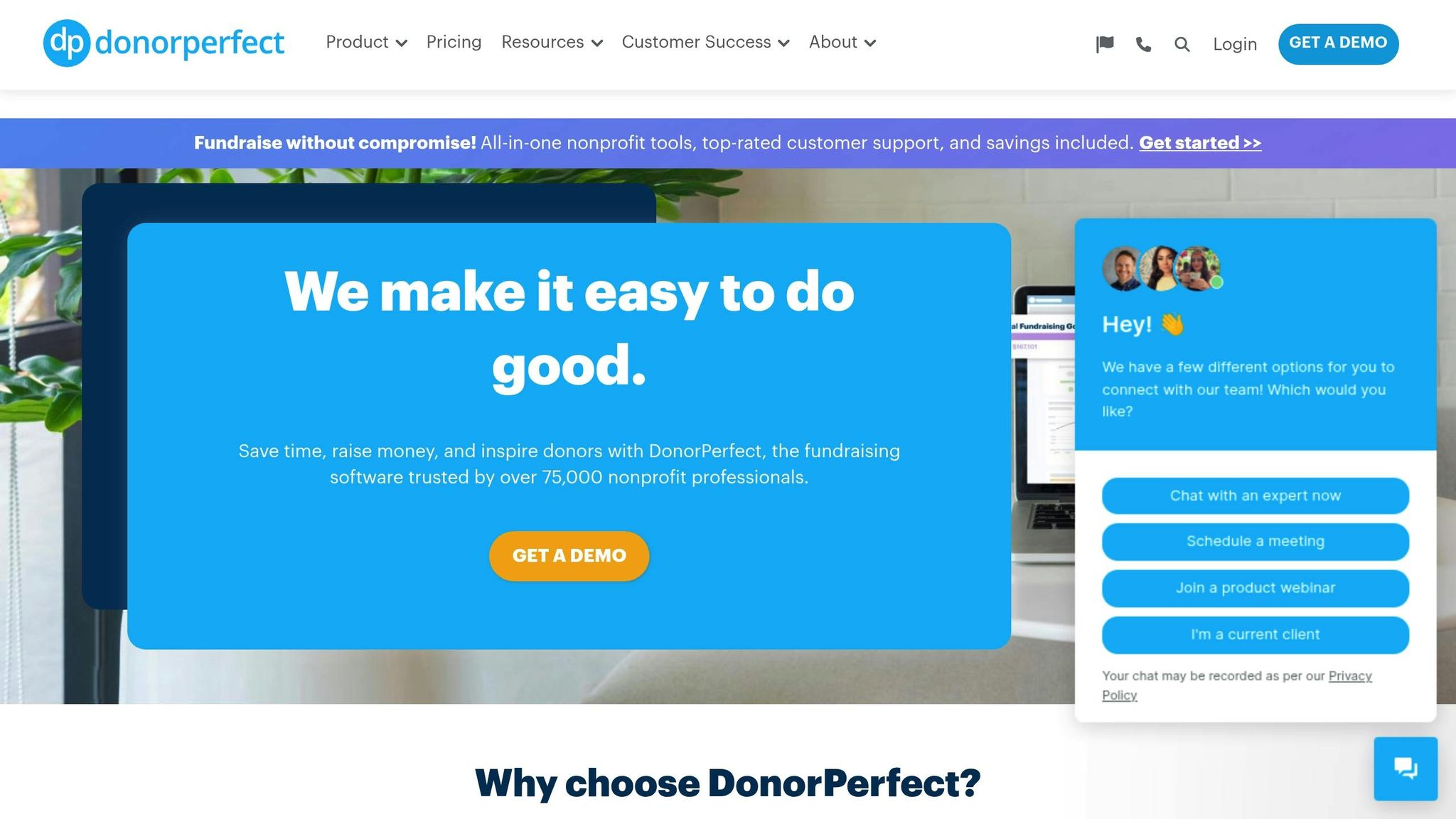
DonorPerfect focuses on simplifying donor management through automation, creating a 360-degree donor profile that combines giving history, volunteer participation, event attendance, and communication preferences. This comprehensive view allows nonprofits to craft highly tailored engagement strategies.
Donor Engagement Automation Features
One of DonorPerfect's standout strengths is its ability to automate donor communications, ensuring that interactions remain timely and consistent. The platform handles donation processing, automatically sends tax receipts, and delivers thank-you messages to donors without any delay. This streamlining of acknowledgment workflows ensures no donor is left waiting for a response.
The system also excels at personalized donor communications, offering tools for targeted email campaigns, thank-you notes, and appeals tailored to specific donor segments. Using donor profiles and past donation data, nonprofits can segment their audience and trigger automated responses. For example, a mid-sized nonprofit in the U.S. utilized these features to send automated thank-you emails and segment donors effectively, achieving a 15% boost in donor retention and a 20% increase in recurring donations within a year.
Beyond communication, DonorPerfect enhances overall efficiency through robust workflow automation.
Workflow Automation Capabilities
From processing donations and tracking pledges to managing recurring gifts and event registrations, DonorPerfect automates key tasks. This ensures that no donor interaction slips through the cracks, allowing teams to focus on building stronger relationships.
A particularly useful feature is the platform's integration with Double the Donation, which automates matching gift outreach. By sending personalized reminders and follow-ups for corporate gift matching, nonprofits can recover revenue that might otherwise go unclaimed. While results vary, this feature has proven effective in increasing matching gift contributions for many organizations.
Integration Options
DonorPerfect integrates seamlessly with tools like QuickBooks Online, Double the Donation, and a variety of fundraising platforms. These integrations ensure smooth data flow, reducing manual entry errors and maintaining accurate records.
The platform also connects with online giving tools, event management systems, and marketing automation software. These connections not only streamline administrative tasks but also enhance donor engagement by consolidating data into one unified system.
Suitability for U.S. Nonprofits
Designed with U.S. nonprofits in mind, DonorPerfect supports American currency formatting ($), date conventions (MM/DD/YYYY), and generates IRS-compliant tax receipts. Its communication tools adhere to American English standards, and its reporting features align with U.S. nonprofit regulations.
Experts recommend that U.S.-based organizations leverage DonorPerfect’s automation tools to reduce manual tasks and maintain consistent donor outreach. Pairing the platform with matching gift tools and accounting software can further improve fundraising efforts while ensuring data accuracy and compliance.
2. Bloomerang
Bloomerang focuses on donor retention with its engagement meter, a simple visual tool that highlights highly engaged donors and those who may need extra attention.
Donor Engagement Automation Features
Bloomerang's constituent timeline captures every donor interaction - whether it's a donation, volunteer work, event participation, or correspondence. This comprehensive view allows nonprofits to follow up in a timely and personalized way. Its automation tools enable tailored email campaigns and targeted appeals for specific donor segments. For example, the system can send automated thank-you messages immediately after donations, ensuring donors feel appreciated. The engagement meter takes this a step further by helping organizations spot donors at risk of disengaging or those primed for deeper involvement.
These features, combined with automated workflows, simplify donor management and enhance overall engagement.
Workflow Automation Capabilities
Bloomerang reduces staff workload by automating routine tasks like acknowledgments, follow-ups, and managing recurring gifts. It also handles data processing, pledge tracking, and generating IRS-compliant receipts. With customizable workflows, nonprofits can adjust communication strategies to fit the needs of different donor groups, ensuring messages are both relevant and consistent.
Integration Options
To expand its functionality, Bloomerang integrates easily with popular tools like online giving platforms, email marketing software, and accounting systems commonly used by nonprofits in the U.S. These integrations streamline data flow, minimize manual entry, and keep donor records up to date. For instance, donation data can be imported automatically, triggering acknowledgment emails and other follow-up actions. This connected ecosystem makes managing campaigns more efficient and cohesive.
Suitability for U.S. Nonprofits
Bloomerang is tailored to the needs of U.S. nonprofits, supporting U.S. currency, MM/DD/YYYY date formats, and IRS-compliant tax documentation. Starting at $125 per month, it’s an affordable option for mid-sized organizations aiming to improve donor engagement. The platform aligns with U.S. fundraising standards, offering reporting tools that meet nonprofit accounting requirements. Communication templates are designed in American English, and its emphasis on donor retention reflects the importance of maintaining relationships - a cost-effective strategy critical for long-term success in the U.S. nonprofit sector.
3. CharityEngine
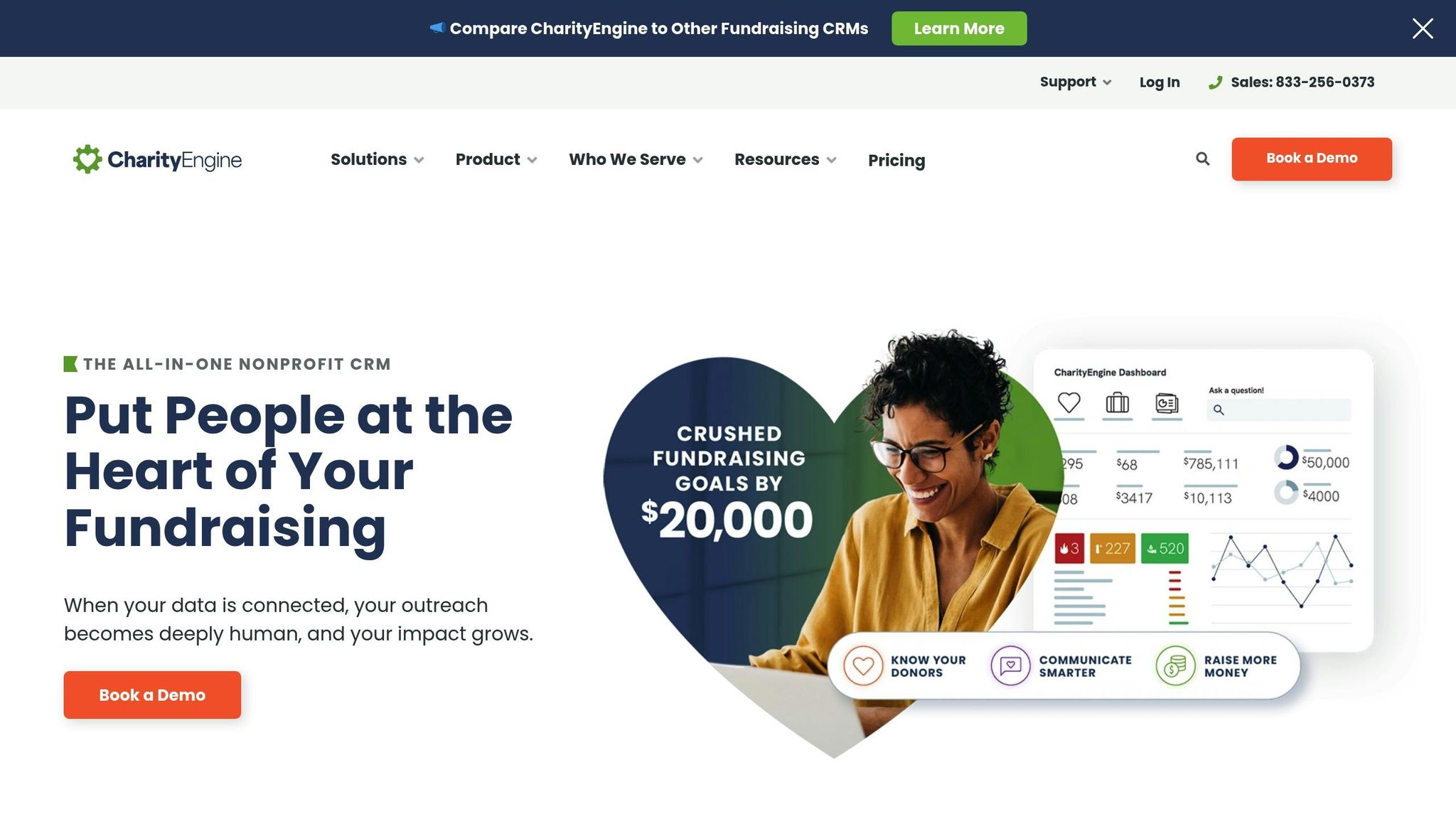
CharityEngine stands out as a fundraising management platform, but it offers limited publicly available details about its automation features. Specifically, information on its donor engagement tools and workflow capabilities for U.S. nonprofits is sparse.
While CharityEngine likely includes essential features like automated donor communications, integrated email marketing, real-time data tracking, and specialized integrations, these aspects aren't well-documented in official resources. To get a full understanding of what the platform can offer, nonprofits are encouraged to request a demo and carefully review the most up-to-date documentation.
Because of this lack of detailed public information, it's crucial for organizations to contact CharityEngine directly to assess whether its features align with their donor engagement and automation goals.
4. DonorDock
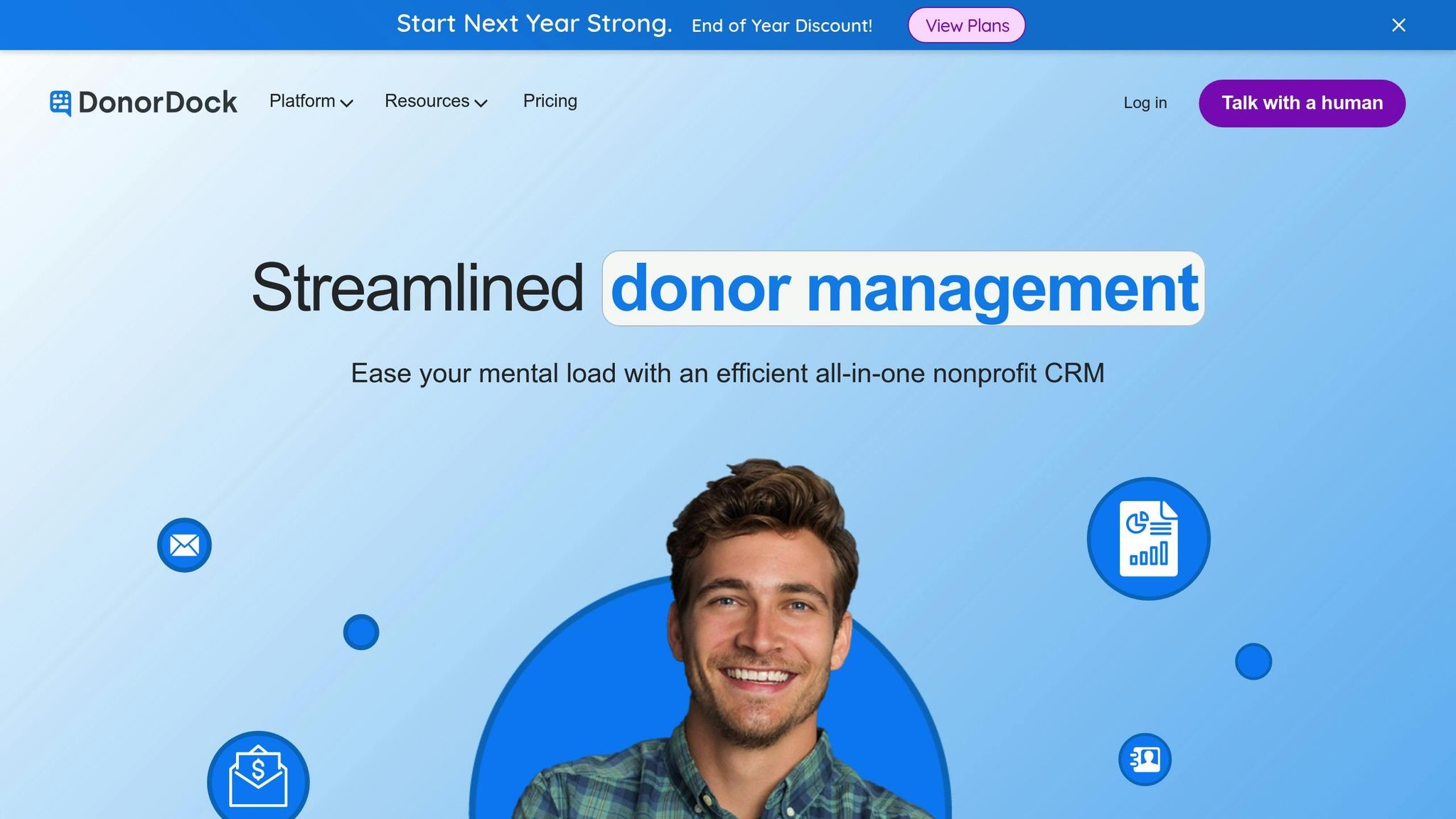
DonorDock stands out as a nonprofit CRM tailored for small to mid-sized organizations in the U.S., offering a straightforward yet effective set of automation tools. With pricing starting at $100 per month for unlimited contacts, it provides an affordable option for nonprofits looking to streamline their operations and enhance donor engagement.
Donor Engagement Automation Features
One of DonorDock's standout tools is its ActionBoard virtual assistant, which suggests actions based on donor behavior. This feature helps automate email campaigns and creates personalized donor journeys by analyzing giving history and engagement patterns. In practice, a mid-sized nonprofit using DonorDock reported a 20% boost in repeat donations and reduced manual follow-ups by 30%.
Workflow Automation Capabilities
DonorDock simplifies stewardship tasks like acknowledging gifts, celebrating donor milestones, and sending recurring gift reminders. For instance, when a donation is made, the platform can instantly send a thank-you email, update the donor's profile, and schedule follow-up actions - all without staff involvement. The ActionBoard also enables donor segmentation based on factors such as donation history, engagement level, event attendance, and communication preferences. This segmentation allows nonprofits to deliver highly targeted and meaningful outreach.
Integration Options
The platform integrates seamlessly with tools nonprofits frequently use, such as Mailchimp for email marketing, payment processors, and accounting software. Additionally, its connection with Double the Donation streamlines matching gift processes, making it easy for organizations to store and access matching gift details.
Suitability for U.S. Nonprofits
Designed with U.S. organizations in mind, DonorDock supports U.S. currency, MM/DD/YYYY date formats, and generates IRS-compliant receipts. Its reporting tools, like annual giving statements and tax acknowledgment letters, ensure compliance with regulatory requirements. Thanks to its user-friendly design and budget-friendly pricing, DonorDock is an excellent choice for smaller nonprofits that may lack extensive IT support. This platform continues to set the standard for accessible and effective donor engagement tools.
5. Fundmetric
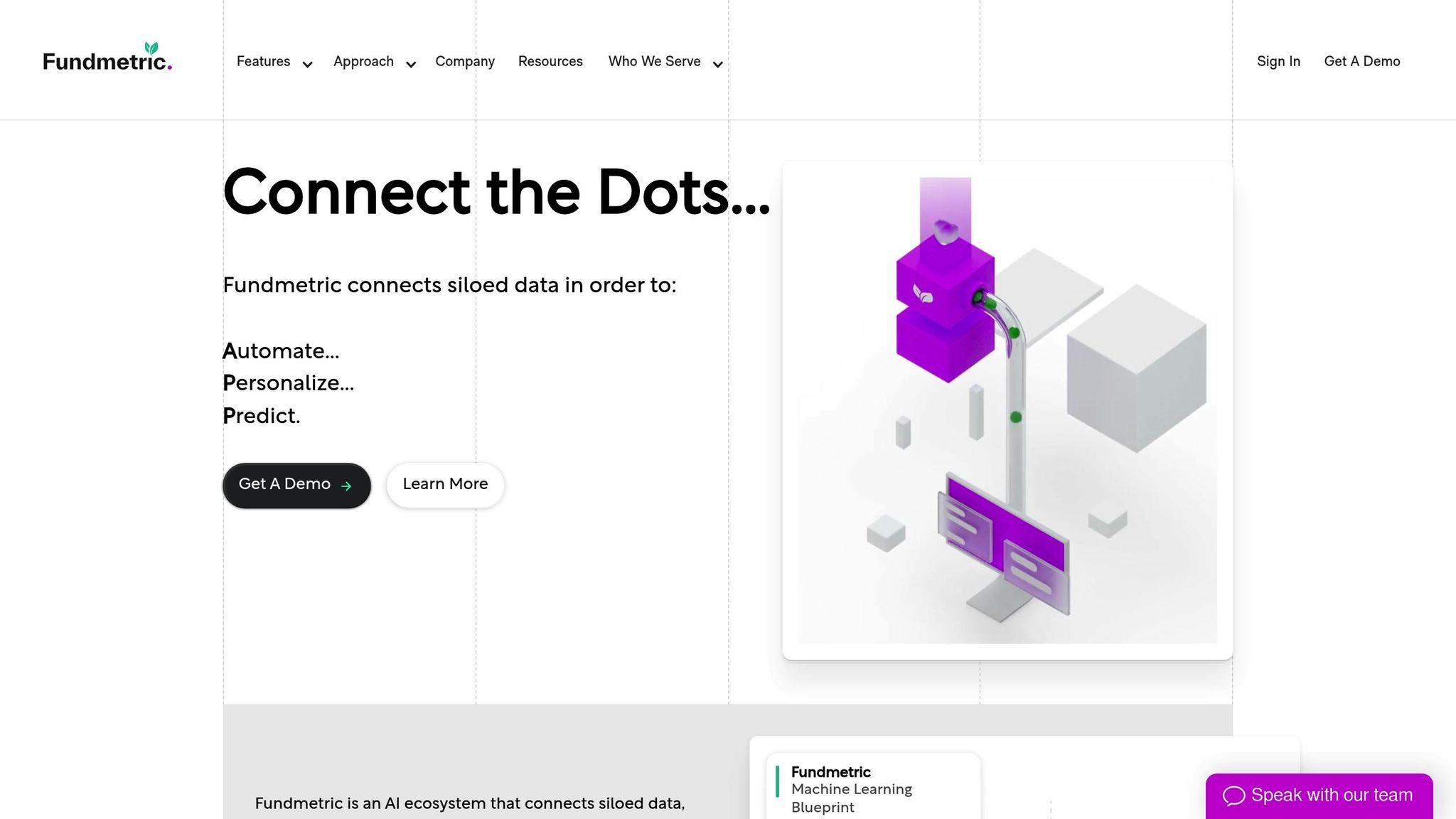
Fundmetric is a customer relationship management (CRM) platform that leverages AI and predictive analytics to automate donor engagement. With pricing ranging from $500 to $1,000 per month, it’s designed for mid-sized nonprofits aiming to enhance donor relationships with data-driven strategies. Unlike basic automation tools, Fundmetric emphasizes predictive insights over simple reactive communications.
Donor Engagement Automation Features
Fundmetric stands out by using predictive analytics to analyze donor behavior and forecast future contributions. This allows nonprofits to identify supporters who may be at risk of disengaging and develop proactive strategies to retain them. By focusing on predictive insights, organizations can transition from merely reacting to donor actions to anticipating their needs, creating a more personalized and effective engagement process. This approach also simplifies workflows, making donor management more efficient.
Workflow Automation Capabilities
Routine tasks like sending thank-you emails and follow-ups are streamlined through Fundmetric, cutting manual processes by up to 40% [Fundmetric case studies, 2024]. For example, the American Red Cross saw a 25% boost in donor retention and reduced manual tasks by 35% within six months of adopting Fundmetric’s predictive tools [Fundmetric case studies, 2024]. These results highlight the potential for nonprofits to save time and improve donor relationships by integrating predictive analytics into their operations.
Integration Options
Fundmetric’s tools are designed to work seamlessly with popular fundraising platforms such as Blackbaud, Salesforce, and DonorPerfect. It also offers an API-driven approach for custom integrations, making it a flexible choice for organizations with complex tech setups. This means nonprofits can utilize their existing donor data without needing to overhaul their current systems, ensuring a smoother transition and better data utilization.
Suitability for U.S. Nonprofits
Fundmetric is tailored to meet the specific needs of U.S. nonprofits, particularly mid-sized to large organizations. It complies with U.S. fundraising regulations and data privacy standards, supports U.S. currency formats, and uses the MM/DD/YYYY date style. Additionally, it generates tax-compliant documentation for donors. However, the platform’s advanced features often require dedicated staff with technical expertise, which might make it less practical for smaller nonprofits with limited resources.
6. Givebutter
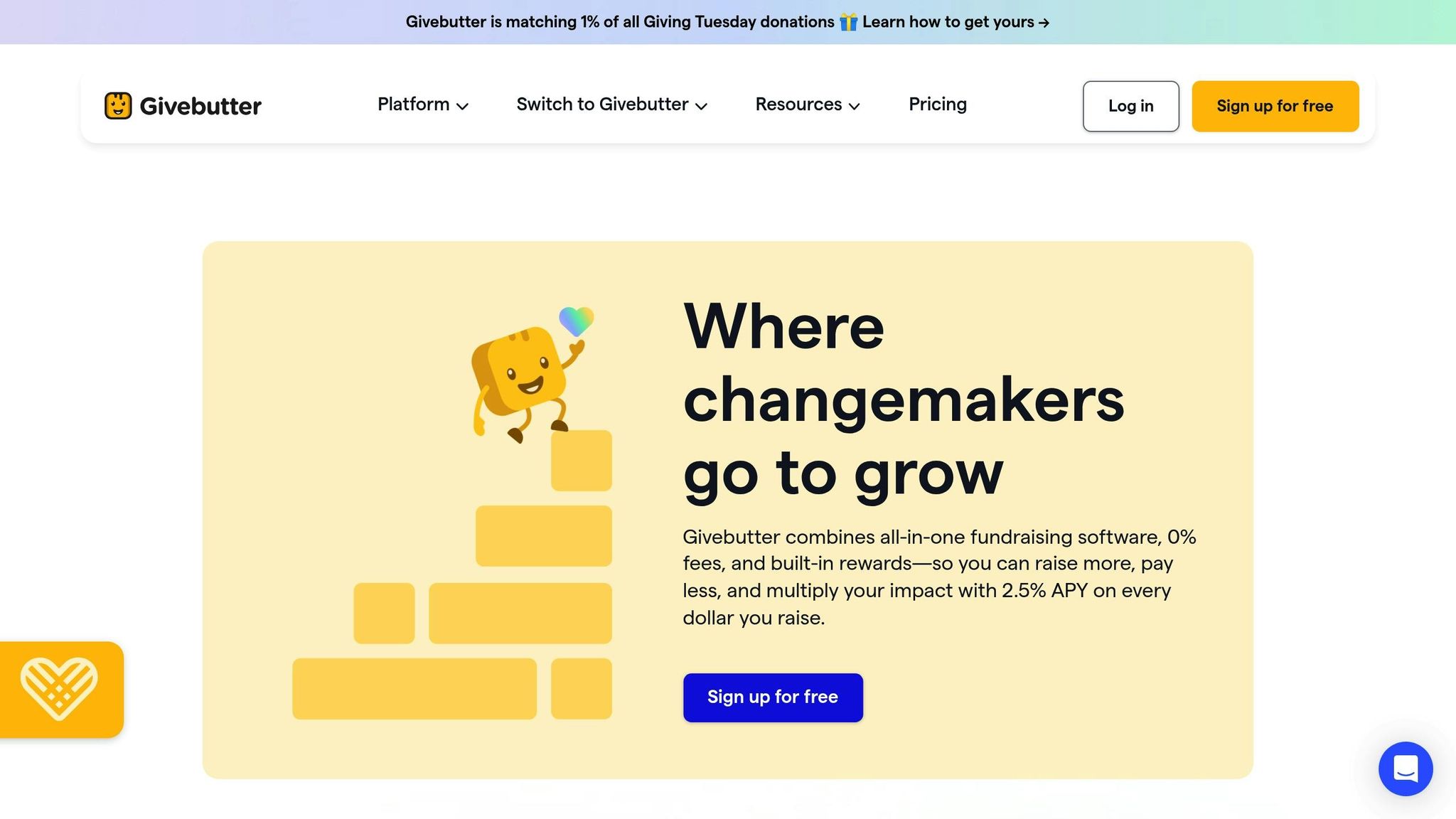
Givebutter takes a mobile-first approach to donor management, offering nonprofits a way to streamline operations and meet rising donor expectations. As an all-in-one nonprofit CRM, it combines donor management, event coordination, and marketing automation into a single platform. While it provides a free plan for basic needs, advanced features start at $99 per month.
Donor Engagement Automation Features
Givebutter focuses on personalized, real-time communication triggered by donor actions. For instance, when someone donates, registers for an event, or volunteers, the platform automatically sends tailored thank-you notes, receipts, and updates. This ensures every supporter feels acknowledged and valued right away.
The platform also segments donors based on factors like donation history, event participation, and campaign involvement. This allows nonprofits to send targeted messages - whether to first-time donors, recurring contributors, or event attendees - boosting engagement and fostering stronger relationships.
A standout example: In March 2023, United Way of Greater Los Angeles used Givebutter for its annual gala and saw a 30% increase in donor retention within a year.
Workflow Automation Capabilities
By automating repetitive tasks, Givebutter helps nonprofits save time and focus on what matters most. It handles tasks like sending donation reminders, scheduling follow-up emails, and updating donor records after transactions. New donors are nurtured through automated email sequences, gradually increasing their involvement.
The automation also extends to event management and volunteer coordination. When someone signs up for a fundraising event, Givebutter takes care of confirmation emails, event reminders, and post-event follow-ups. This approach ensures no interaction is missed while freeing up staff to focus on high-priority activities.
According to Givebutter’s 2024 case studies, organizations using these features often see a 20-30% rise in donor retention rates and a 15-25% improvement in fundraising efficiency. These gains are largely attributed to timely and consistent communication that keeps supporters engaged even between major campaigns.
Integration Options
Givebutter integrates seamlessly with tools like Zapier, Salesforce, Mailchimp, and QuickBooks. These integrations allow nonprofits to sync donor data, streamline email campaigns, manage finances, and strengthen donor relationships.
For example, when donor information is updated in one system, it automatically syncs across all connected platforms. This not only reduces manual data entry errors but also ensures smoother, more consistent communication across all touchpoints.
Suitability for U.S. Nonprofits
Tailored for U.S.-based organizations, Givebutter supports dollar transactions and generates IRS-compliant receipts. Its mobile-first design, peer-to-peer fundraising tools, and targeted campaign features align with the expectations of American donors. With a 4.7/5 rating on Capterra from over 200 reviews, nonprofits frequently praise its user-friendly interface and responsive support, making it easy to implement automation quickly and effectively.
sbb-itb-deea482
7. Giveffect
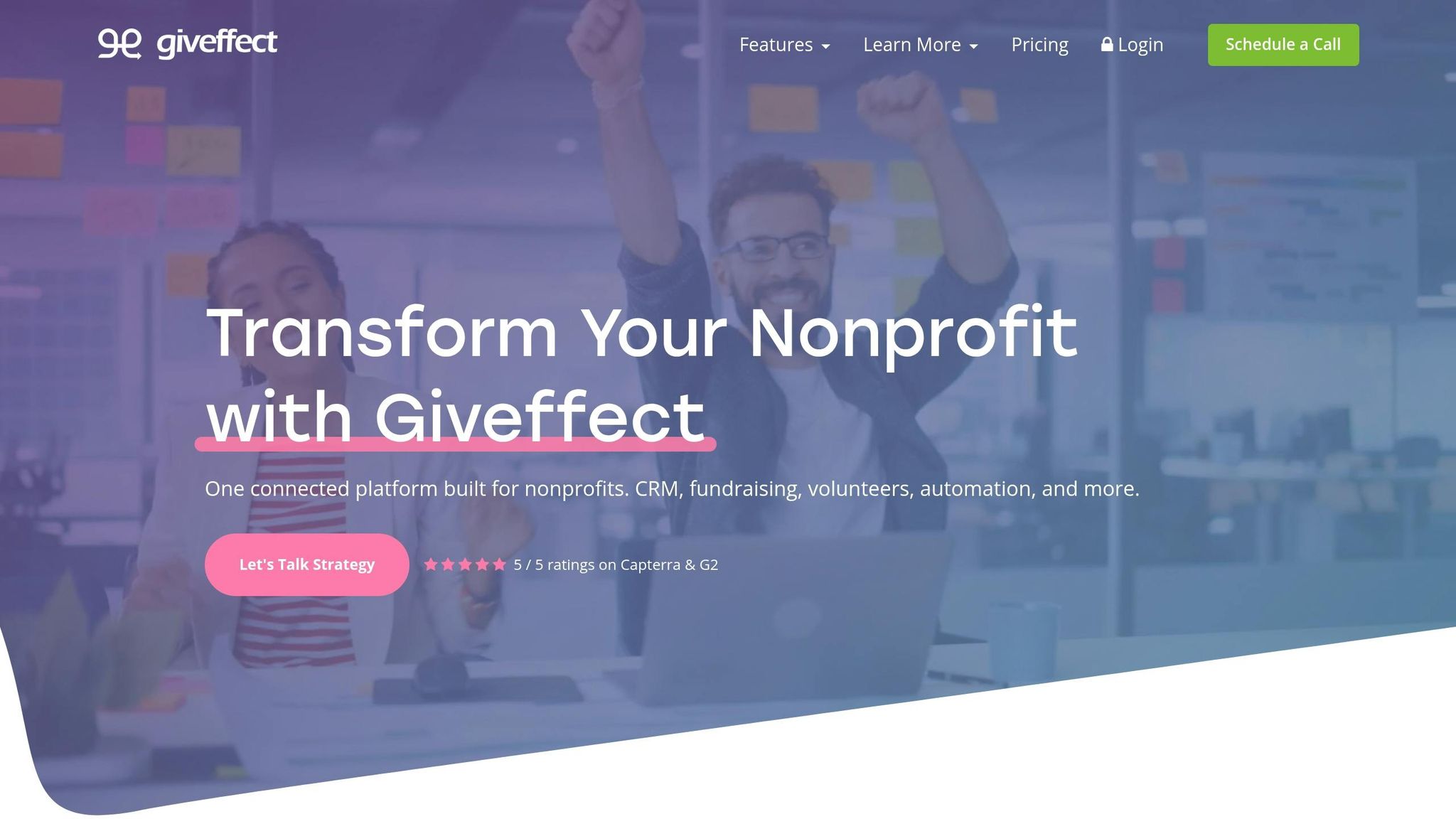
Giveffect stands out as a robust donor engagement platform designed for mid-sized nonprofits looking to streamline their operations. It goes beyond the basics of donor management by combining tools for fundraising, volunteer coordination, event planning, and accounting into a single system. With pricing ranging from $399 to $599 per month, it’s a practical choice for organizations ready to consolidate multiple tools and automate their workflows.
Donor Engagement Automation Features
At the heart of Giveffect’s donor engagement tools is its Smart Automation system, which ensures timely and relevant communication. For instance, when donors make a contribution, sign up for an event, or volunteer, the system triggers automated messages tailored to their actions.
Giveffect also uses AI to personalize donor interactions. It segments donors based on their activity and sends customized follow-ups and appeals. A first-time donor might receive a warm welcome email series, while recurring donors get messages highlighting the impact of their ongoing support. The platform also tracks real-time engagement, such as email opens or event participation, enabling nonprofits to fine-tune their messaging and timing for better results.
Workflow Automation Capabilities
By centralizing data from donors, volunteers, and members, Giveffect minimizes the need for manual data entry. Tasks like sending donation acknowledgments, following up after events, onboarding volunteers, and tracking grants can all be automated. For example, if a donor volunteers at an event, their record is automatically updated across the system, triggering thank-you emails and setting up future engagement opportunities.
One mid-sized nonprofit in the U.S. reported a 15% boost in donor retention within a year of adopting Giveffect’s Smart Automation. They also saved roughly 20 hours per week on administrative tasks, allowing their team to focus on building stronger relationships with key donors.
Integration Options
Giveffect integrates seamlessly with tools like Double the Donation, which automates matching gift processes. This integration identifies donors eligible for matching gifts and sends personalized follow-ups, leading to a 20% increase in matching gift revenue in one case study. The platform also connects with email marketing tools and payment processors, offering flexibility to meet the specific needs of each nonprofit.
Suitability for U.S. Nonprofits
Giveffect is tailored to the operational needs of U.S. nonprofits. It supports dollar-based currency formatting, MM/DD/YYYY date formats, and American English throughout its interface. The platform also generates IRS-compliant donation receipts and offers reporting features that align with U.S. audit and grant application standards.
Its comprehensive feature set makes it an excellent fit for organizations managing varied revenue streams, from annual campaigns to grants and major gifts. However, the platform’s higher cost and advanced capabilities are best suited for nonprofits with complex needs, rather than smaller organizations seeking basic tools. To make the most of Giveffect, investing in staff training and a well-planned implementation process is essential. For mid-sized nonprofits aiming to unify their operations and strengthen donor relationships, Giveffect is a compelling option.
8. Keela
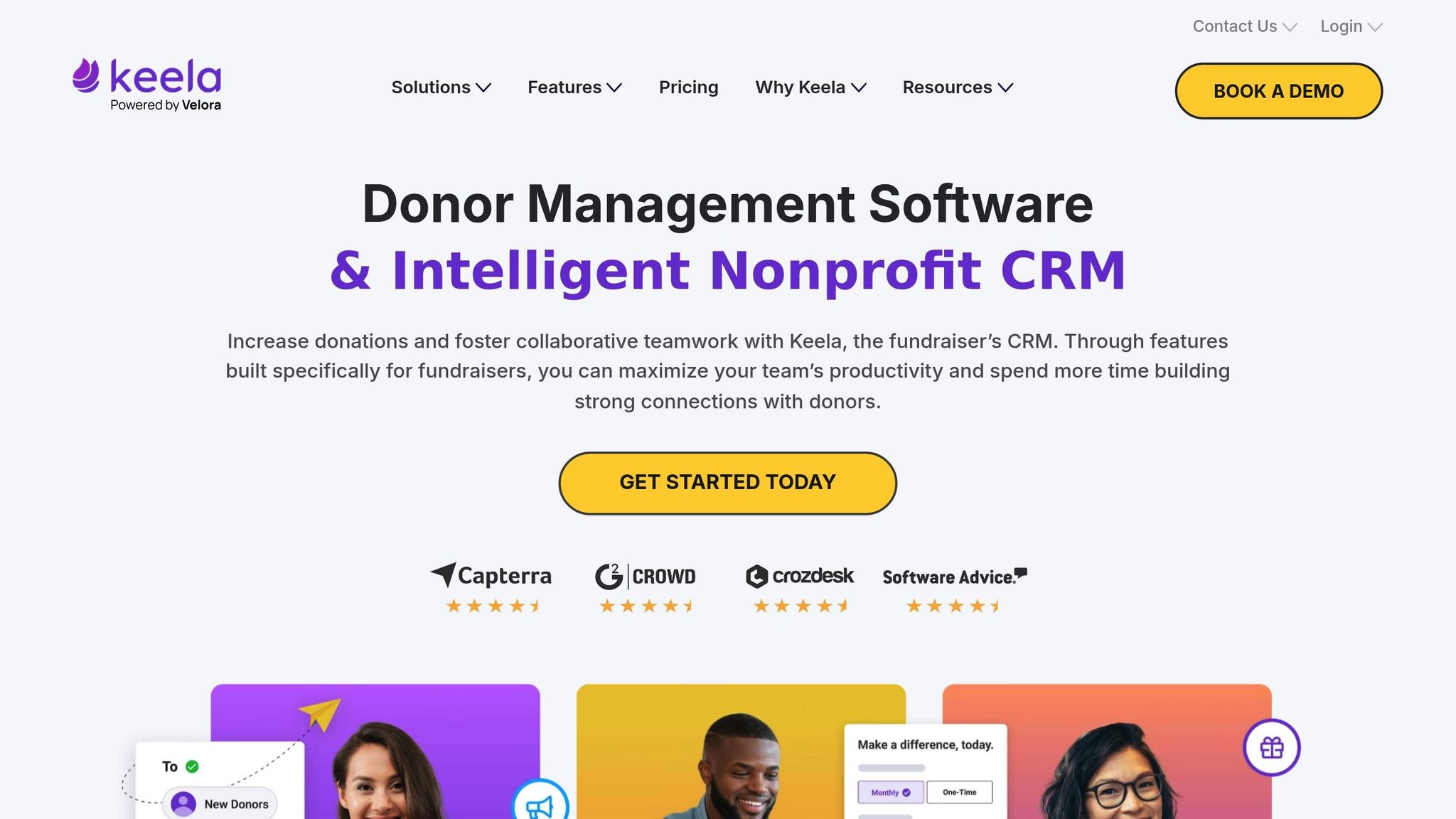
Keela presents itself as a robust donor management system, blending AI-driven insights with practical automation tools. Starting at approximately $300 per month, it’s designed for mid-sized U.S. nonprofits that need advanced automation without the complexity of enterprise-level systems. By consolidating donor, volunteer, and project tracking into one platform, Keela simplifies operations and lays the groundwork for its powerful automation features.
Donor Engagement Automation Features
Keela’s standout feature is its AI-powered donor insights, which predict donor behavior and optimize communication timing. The platform automatically segments donors based on their giving history, engagement patterns, and behavioral data. From there, it initiates personalized email campaigns tailored to each group. For instance, recent donors are placed into automated stewardship workflows, while lapsed donors receive re-engagement campaigns aimed at rekindling their support.
Another noteworthy feature is Keela’s native mobile applications, which allow staff to access full CRM functionality on the go. Unlike mobile-optimized websites, these apps let fundraisers update donor records, send follow-ups, and monitor engagement metrics directly from their smartphones - whether they’re at events or meeting with potential donors.
Keela also integrates with Double the Donation to simplify matching gift processes. When donors contribute, their information is automatically checked against a matching gift database. Eligible donors are then guided through the process with step-by-step instructions, eliminating the need for manual research. This streamlined approach not only saves time but also ensures organizations don’t miss out on matching gift opportunities.
Workflow Automation Capabilities
Keela takes operational efficiency up a notch with its automated workflows. Tasks like generating donation receipts (formatted for U.S. tax compliance) and sending thank-you emails based on gift size and donor history are handled automatically. Staff can also set up automated reminders for pledge payments, event follow-ups, and renewal campaigns, reducing the need for manual intervention.
The results speak for themselves: nonprofits using Keela have reported saving up to 30% of their time while improving donor retention by 15-20% through automated engagement. Additionally, Keela’s AI insights have been shown to help organizations convert up to 3.5 times more donors, especially when identifying major gift prospects and optimizing outreach timing.
Event management is another area where Keela shines. When supporters register for events, make payments, or attend activities, their profiles are updated automatically across the system. This ensures donor records remain accurate and up-to-date at all times.
Integration Options
Keela integrates with popular tools like Mailchimp, QuickBooks, Stripe, and Double the Donation, allowing data to flow seamlessly between platforms.
The Double the Donation integration is particularly valuable for U.S. nonprofits. With corporate matching gifts accounting for 5-15% of individual giving depending on donor demographics, this feature can significantly boost revenue. By instantly identifying eligible donors and guiding them through the matching process, the integration increases completion rates while reducing the workload for staff.
Suitability for U.S. Nonprofits
Keela is tailored to meet U.S. nonprofit standards, offering features like $ currency formatting, MM/DD/YYYY date formats, and IRS-compliant receipts. Its reporting tools also align with American nonprofit accountability requirements, making it a strong choice for mid-sized organizations.
This platform is ideal for nonprofits with dedicated fundraising teams, complex donor bases, or multiple fundraising channels. Organizations pursuing data-driven strategies will particularly benefit from Keela’s sophisticated tools. However, smaller nonprofits may find the $300+ monthly cost and advanced features to be more than they currently need.
For those considering Keela, it’s important to allocate time for staff training and implementation to fully leverage the platform’s automation capabilities. Proper onboarding will ensure the system delivers maximum value.
9. Neon CRM
Neon CRM is a donor management system tailored specifically for U.S. nonprofits, offering tools to simplify and automate fundraising tasks. As part of the Neon One family, it’s trusted by thousands of organizations across the country. What sets it apart is its ability to handle nonprofit needs right out of the box, without requiring extensive customization.
Donor Engagement Automation Features
One of Neon CRM's strengths is its ability to personalize donor communications. For example, it automatically sends thank-you messages based on factors like gift size, donor history, and individual preferences. But it doesn’t stop there. The platform segments donors by their giving history, engagement level, and custom fields, allowing nonprofits to send highly targeted appeals and follow-ups.
First-time donors are welcomed with a dedicated email series, while major donors receive messages tailored to their giving potential. For donors who’ve gone inactive, Neon CRM kicks off re-engagement campaigns to bring them back into the fold.
Recurring donations are also managed seamlessly. The system handles subscription updates, payment failures, and renewal reminders automatically, reducing donor churn by sending updated payment links when needed. This smooth process ensures nonprofits can focus more on their mission and less on administrative headaches.
Workflow Automation Capabilities
Neon CRM simplifies administrative work by automating several routine tasks. For example, it generates IRS-compliant tax receipts for every donation, saving time and ensuring compliance.
Event management is another area where Neon CRM shines. When supporters register for an event, make payments, or check in, their profiles are instantly updated across the system. This eliminates manual data entry and keeps donor records accurate. After events, the platform automatically launches follow-up emails to thank participants and encourage further engagement.
Volunteer coordination is also integrated into the system. Nonprofits can track volunteer activities and communications alongside donor data, giving staff a complete view of how supporters are contributing - whether through financial donations, volunteering, or both.
Integration Options
Neon CRM also offers a wide range of integrations to enhance its functionality. For financial management, it connects with QuickBooks, ensuring donation data flows directly into accounting systems without the hassle of manual uploads. Email marketing integrations allow nonprofits to sync donor segments with their preferred tools, maintaining consistent data across platforms.
One standout feature is the Double the Donation integration, which helps nonprofits capture matching gifts. When a donation is processed, the system automatically checks the donor’s information against a matching gift database. Eligible donors are then sent instructions to complete their employer’s matching process, making it easier for nonprofits to secure this additional revenue stream without adding extra work for staff.
The platform also supports multiple payment processors, enabling donations through various channels like online giving and text-to-donate campaigns. No matter how supporters contribute, all data is funneled into the central CRM system, triggering the appropriate workflows.
Suitability for U.S. Nonprofits
Neon CRM is built with U.S. nonprofits in mind. It supports U.S. dollar formatting, MM/DD/YYYY date structures, and standard American number formats. It also generates IRS-compliant donation receipts and financial reports, taking the stress out of meeting regulatory requirements.
The platform’s reporting tools allow nonprofits to track vital metrics like donor retention, campaign performance, and overall fundraising progress. These reports are formatted to meet U.S. nonprofit accountability standards, making it easier to share results with boards, funders, and other stakeholders.
Neon CRM is a great fit for nonprofits of all sizes, from small local groups to large national organizations. Its cloud-based design makes it accessible for remote teams - an increasingly important feature as flexible work arrangements become more common. For nonprofits with dedicated fundraising teams, the platform’s automation features can help scale donor engagement efforts without adding to the administrative burden.
For organizations with annual revenues between $1 million and $20 million, Neon CRM provides the tools needed to enhance donor engagement and streamline operations. Additionally, services like Share Services can further amplify these efforts with tailored marketing and fundraising strategies.
10. Virtuous
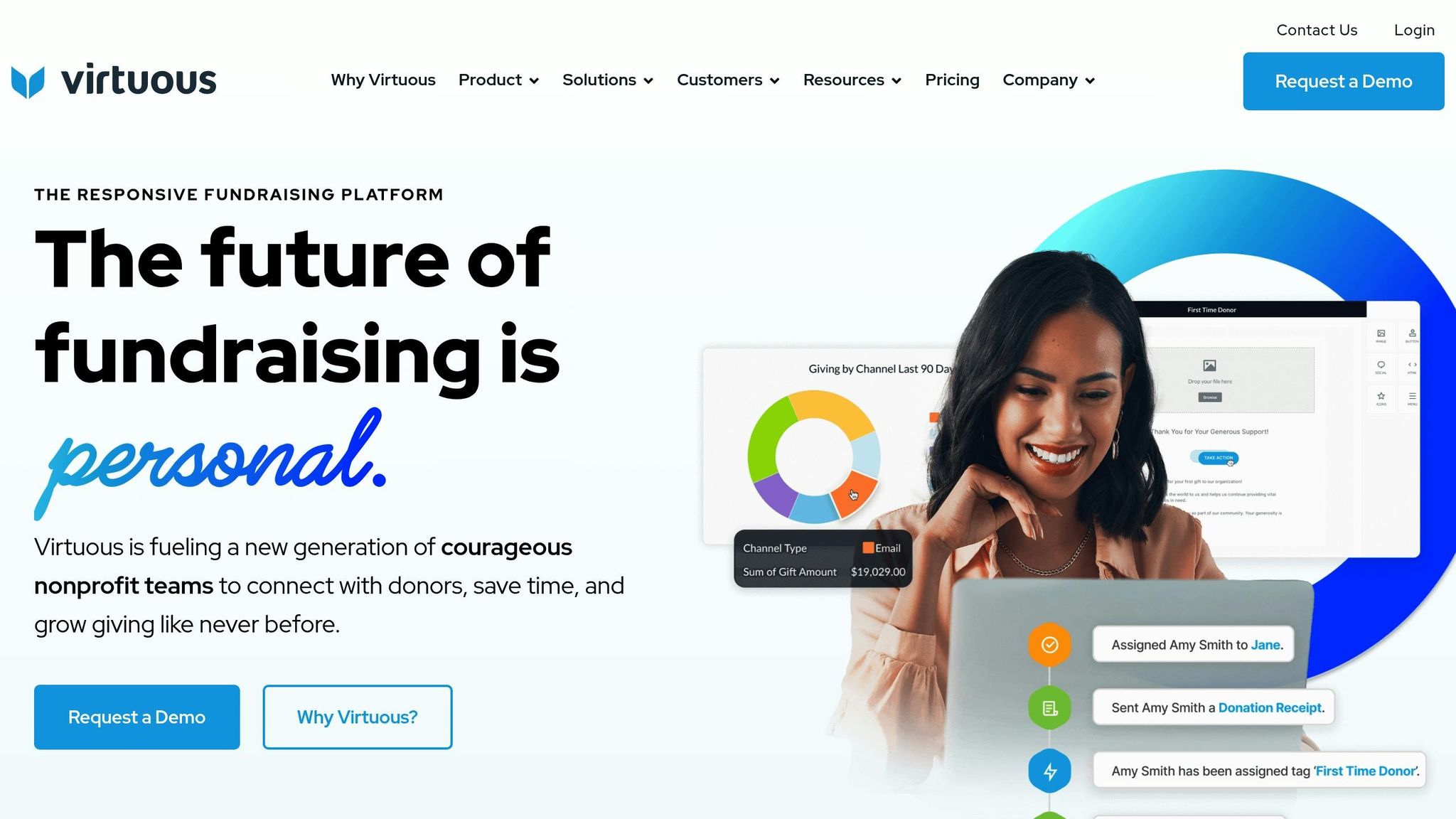
Virtuous CRM enhances donor engagement by combining relationship-focused fundraising with smart automation. This blend of technology and personalization helps mid-sized U.S. nonprofits strengthen connections with donors while scaling their outreach efforts.
Donor Engagement Automation Features
Virtuous uses AI-driven insights to analyze donor behavior and create tailored engagement strategies. By automatically segmenting donors based on factors such as giving history, engagement trends, and demographics, the platform enables nonprofits to deliver personalized messages that resonate on a deeper level.
One standout feature is its donor journey mapping, which adjusts email sequences based on donor responses. For example, it tailors messaging differently for new donors compared to those who have lapsed. Nonprofits using Virtuous have reported email open rates improving by as much as 40%, thanks to its personalized and automated messaging capabilities.
The platform also simplifies recurring gift management by keeping donor records updated when payments are processed. It sends renewal reminders at the right time and even handles payment failures with gentle follow-up emails that include updated payment links, reducing donor churn without requiring manual effort. These seamless, tailored communications integrate smoothly into broader workflow strategies.
Workflow Automation Capabilities
Virtuous is designed to cut down on repetitive administrative tasks, freeing up staff to focus on building relationships. For instance, when a donation is received, the system automatically sends a personalized thank-you email, updates the donor’s profile, and schedules follow-ups for major gifts. Using the automation builder, staff can create sophisticated workflows with ease. For example, if a first-time donor gives more than $500, the platform can assign them to a major gift officer and schedule a personal outreach within 48 hours.
The event management features are just as robust. As supporters register, make payments, or check in for events, their profiles are updated across the system. After the event, Virtuous initiates follow-up sequences to thank participants and encourage further involvement, whether through volunteering, additional donations, or attending future events.
Integration Options
Virtuous integrates with a variety of popular tools to create a unified system for nonprofit operations. It syncs seamlessly with platforms like QuickBooks for financial data and Mailchimp for email marketing, ensuring donor segments stay aligned. Additionally, its compatibility with various payment processors and online giving platforms ensures that contributions automatically feed into the CRM, triggering the appropriate workflows. This unified approach gives nonprofits a complete view of supporter interactions - whether through email, social media, events, or direct mail - helping staff make better-informed decisions.
Suitability for U.S. Nonprofits
Virtuous aligns well with the needs of U.S. nonprofits, adhering to local standards for financial reporting and donor communications. It automatically generates IRS-compliant donation receipts and provides tools for accurate financial reporting. The platform also supports U.S.-specific practices like Giving Tuesday campaigns and end-of-year tax statement generation.
According to data from StratusLIVE, organizations using Virtuous report a 20–30% increase in donor retention after implementing its automated workflows. Pricing starts at around $300 per month, with custom enterprise solutions available. For nonprofits in this range, additional services like Share Services can complement Virtuous by offering tailored marketing and fundraising strategies to further enhance donor engagement.
Platform Comparison: Advantages and Disadvantages
Selecting the right CRM platform for donor engagement automation means understanding how each system stacks up in terms of automation, integration, and scalability. The platforms reviewed here cater to nonprofits of varying sizes, offering different strengths based on budget, automation capabilities, and overall functionality for U.S.-based organizations.
Budget-Friendly Options for Smaller Nonprofits
For nonprofits operating on tighter budgets, DonorDock is a standout choice. Priced at $100 per month, it offers unlimited contact management and a virtual assistant feature called ActionBoard. This tool provides daily outreach suggestions, helping smaller organizations stay on top of donor communications without needing a dedicated team.
Similarly, DonorPerfect is a cost-effective option at $99 per month. It includes donor tracking, customizable reports, email marketing tools, and basic automation like matching gift integration and automated follow-ups. However, its dated interface and limited advanced reporting might be less appealing for nonprofits seeking more modern solutions.
Mid-Range Solutions with Enhanced Automation
For organizations ready to invest a bit more in automation, Bloomerang is worth considering. Starting at $125 per month, it features an engagement meter and automated donor segmentation to boost retention. While its automation tools aren’t as advanced as some competitors, its user-friendly interface and integrations with platforms like Mailchimp and QuickBooks make it a solid choice for improving donor relationships.
CharityEngine offers a more comprehensive approach with integration capabilities and unified supporter records. These features are ideal for growing nonprofits managing complex campaigns. However, its setup process can be challenging, often requiring developer support.
Premium Platforms for Advanced Automation
At the higher end of the spectrum, Giveffect offers an all-in-one system priced between $399 and $599 per month. This platform simplifies fundraising, event management, and volunteer coordination through built-in automation and unified data management. While its robust features are a great fit for mid-sized organizations, smaller nonprofits may find the cost and complexity overwhelming.
Virtuous, starting at $300 per month, focuses on advanced marketing automation powered by AI. It provides personalized donor journeys, detailed workflows, and broad integration options, making it ideal for mid-sized to large nonprofits. However, smaller teams may struggle with its complexity.
Platform Comparison Table
| Platform | Monthly Cost | Best For | Key Strength | Main Limitation |
|---|---|---|---|---|
| DonorDock | $100 | Small nonprofits | Virtual assistant, simple automation | Limited advanced features |
| DonorPerfect | $99 | Small to mid-sized | Affordable, tracking | Dated interface |
| Bloomerang | $125 | Small to mid-sized | Retention tools | Limited advanced automation |
| CharityEngine | $99+ | Growing organizations | Integrations | Complex setup requirements |
| Giveffect | $399–$599 | Mid-sized, all-in-one | Comprehensive automation, unified data | High cost, complexity |
| Virtuous | $300+ | Mid-sized to large | AI-driven insights, advanced automation | Complexity for small teams |
Integration and Workflow Considerations
While pricing and features are important, integration and workflow efficiency can make or break a CRM’s value. Most platforms offer integrations with key tools like matching gift services (e.g., Double the Donation), email marketing systems, and accounting software. However, the ease of integration varies - some platforms sync donor segments effortlessly, while others may require manual data handling.
Workflow automation also differs widely. Some systems provide basic task reminders, while others use AI to map out detailed donor journeys. Nonprofits should weigh their team’s technical expertise and capacity when evaluating these features. Advanced automation can streamline operations significantly if implemented effectively.
U.S. Nonprofit Compliance and Localization
All major platforms cater to the needs of U.S. nonprofits. They support transactions in U.S. dollars, use the MM/DD/YYYY date format, and integrate with U.S.-based payment processors.
Ultimately, the best CRM choice depends on how well its automation tools align with your organization's donor engagement goals and team capabilities. By matching the platform to your strategy, you can maximize outreach and retention efforts. For additional support, partnering with services like Share Services can help tailor marketing and fundraising strategies to your nonprofit’s needs.
Conclusion
Choosing the right CRM for your nonprofit comes down to finding a balance between features, usability, and your organization's specific needs. With these insights, you can make a more informed decision.
For smaller nonprofits, tools like DonorDock and DonorPerfect offer budget-friendly solutions that simplify donor management. Mid-sized organizations, on the other hand, can benefit from platforms that provide more advanced automation to boost efficiency and improve donor retention. Larger nonprofits might prioritize systems with sophisticated workflows and AI-driven personalization to handle their more complex needs.
Integration is another key factor. CRMs that connect seamlessly with email marketing tools, accounting software, and payment processors can break down data silos and enable real-time donor engagement. This ensures that automation actually saves time instead of adding extra administrative tasks.
As donor expectations evolve, the adoption of AI and omnichannel strategies is becoming increasingly important. These trends, paired with strong integration capabilities, highlight the importance of selecting a platform that matches your nonprofit's capacity and goals.
Make use of free trials to test automation workflows with your own donor data. The platform that feels intuitive for your team and aligns with your engagement objectives is likely the best long-term choice. If your nonprofit needs additional support, consulting experts like Share Services can help you fine-tune your CRM investment and enhance your fundraising strategies.
To get the most out of your CRM, make sure to regularly review workflows, provide ongoing staff training, and look for opportunities to optimize your processes. These steps will help ensure your nonprofit continues to see value over time.
FAQs
What should nonprofits look for in a CRM to enhance donor engagement?
When selecting a CRM for donor engagement, nonprofits should prioritize features that make communication smoother, allow for better personalization, and handle repetitive tasks automatically. Look for tools that can track donor interactions, segment your audience, and automate follow-ups like thank-you emails or event invitations.
Equally important is ensuring the CRM integrates seamlessly with your current systems, provides strong reporting options, and fits the size and goals of your organization. For nonprofits with annual revenue between $1–$20 million, solutions tailored by providers like Share Services can boost donor retention, attract new supporters, and help you further your mission effectively.
How does nonprofit CRM automation enhance donor engagement and retention?
Automation in nonprofit CRMs makes donor engagement more efficient by tailoring communications, monitoring donor interactions, and automating follow-ups. These tools help supporters feel appreciated and closely tied to your mission.
When used strategically, automation can transform occasional donors into lifelong advocates, boosting donor retention and fostering deeper, long-term connections. Share Services works to craft customized solutions that empower nonprofits to achieve these outcomes seamlessly.
What CRM integrations are essential for nonprofits to streamline donor engagement and operations?
When choosing a CRM, nonprofits should focus on integration options that streamline operations and make daily tasks easier. Opt for systems that work smoothly with email marketing platforms, payment processors, and accounting software to handle donor communication, process contributions, and monitor financials without hassle. Integrations with event management tools and social media platforms are also valuable for boosting supporter engagement and increasing outreach efforts.
A CRM that connects with the tools you already rely on can save time, cut down on manual data entry, and free up resources to concentrate on nurturing meaningful relationships with your donors.
Related Blog Posts
Get helpful resources, straight to your inbox
We love sharing tools, ideas, and stories that make nonprofit work a little lighter and a lot more effective. Sign up below and we’ll send you practical tips, free resources, and a bit of encouragement—because the work you’re doing matters.
No spam. Just good stuff for good people.